 English
 русский
 Español

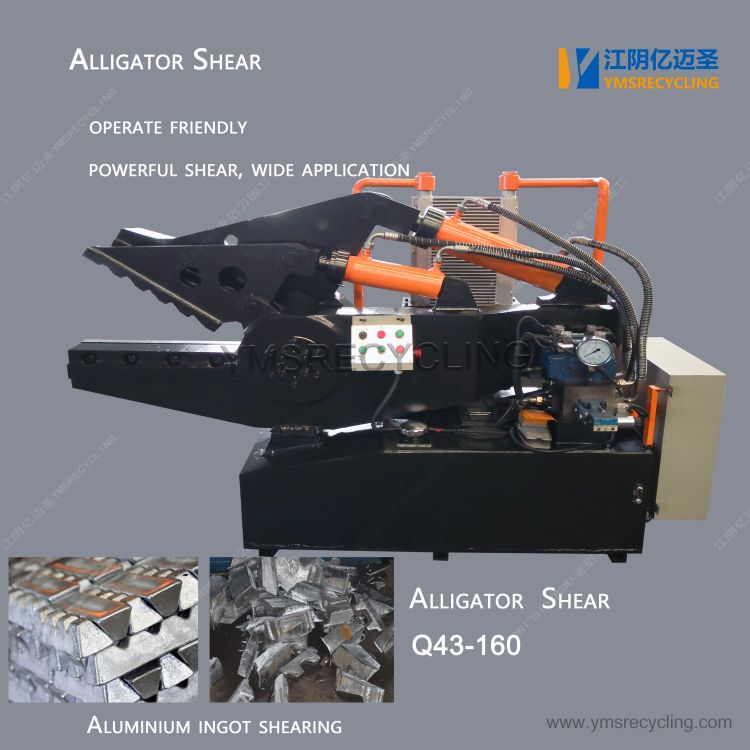
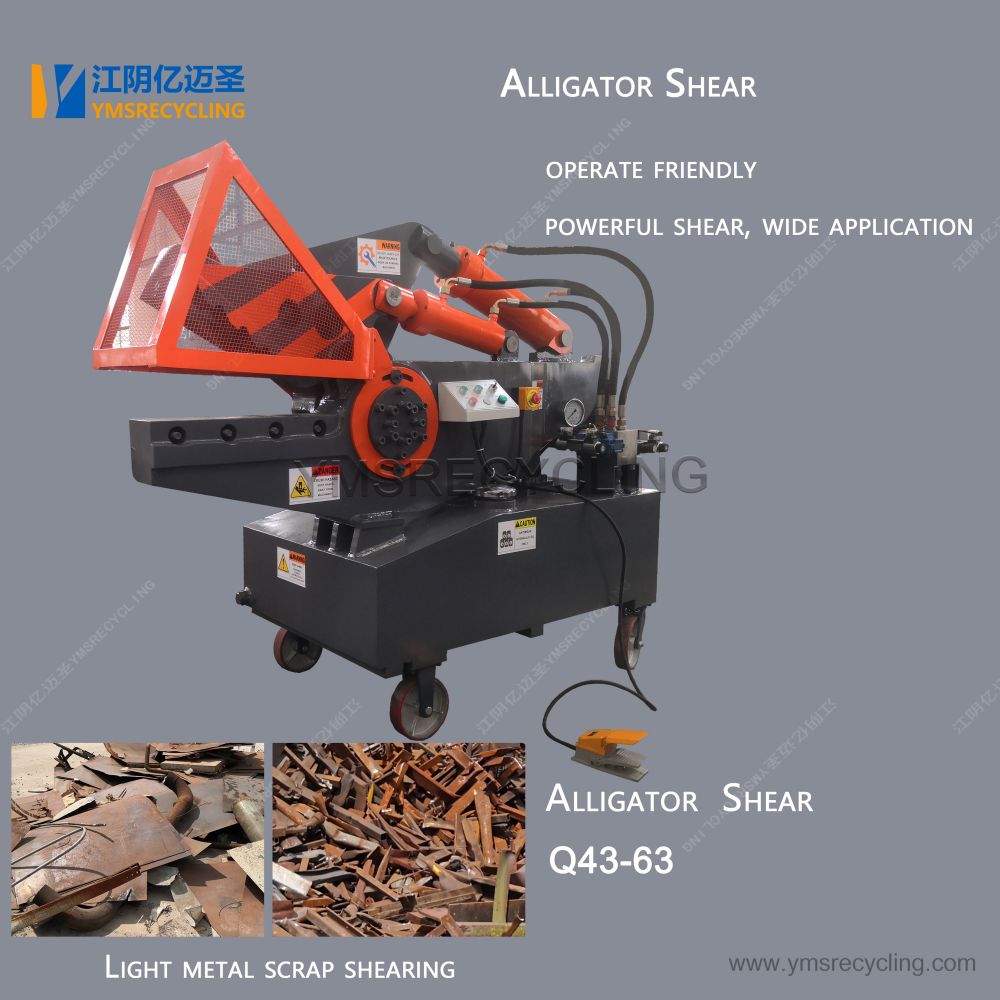
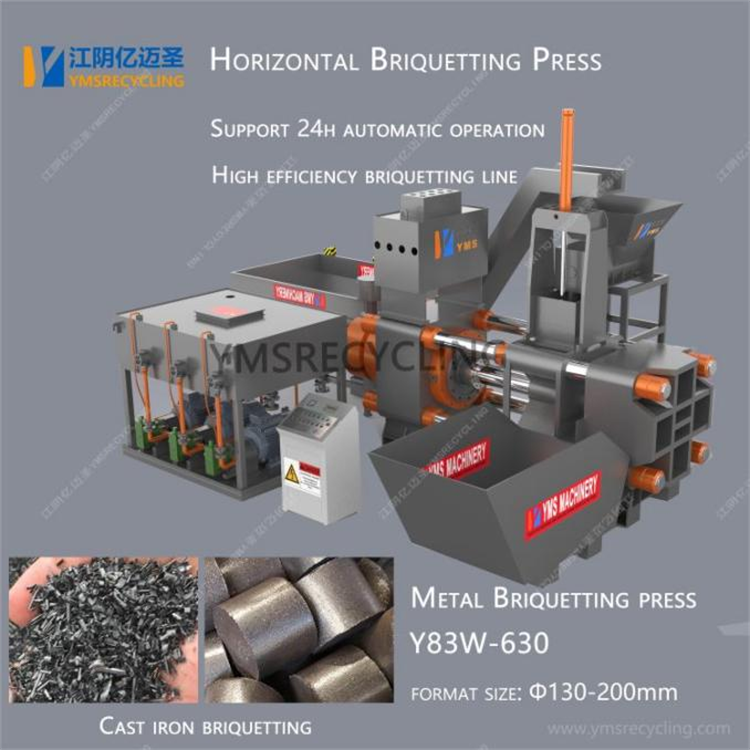
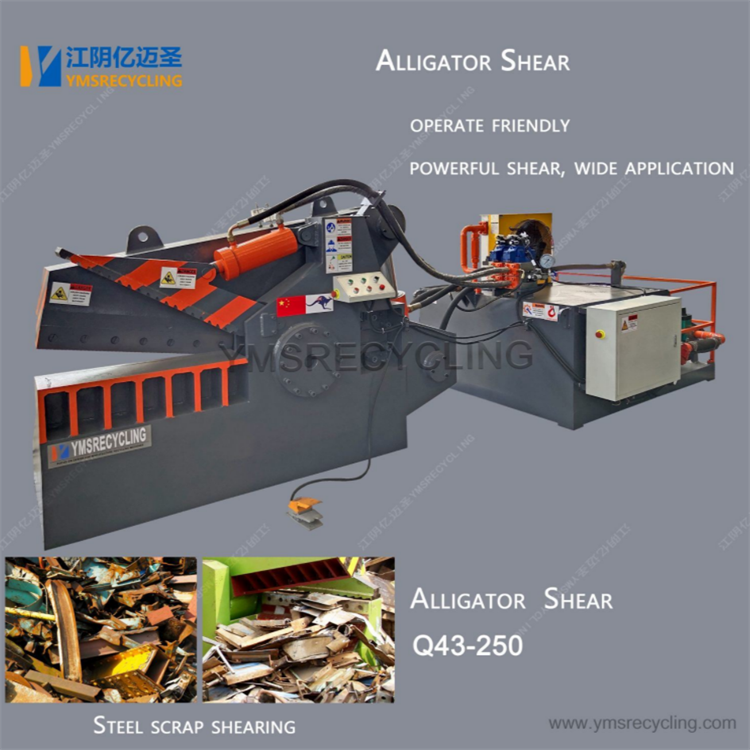
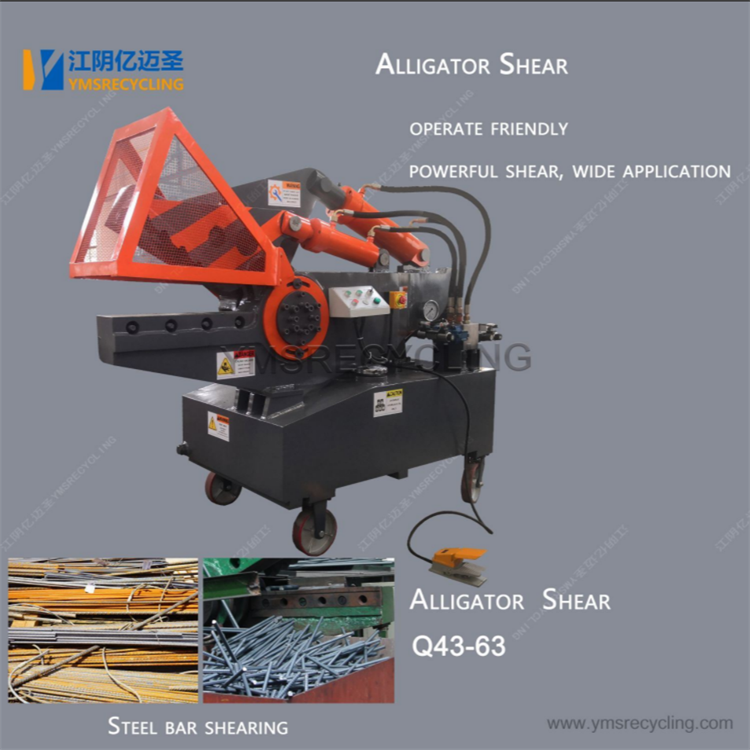
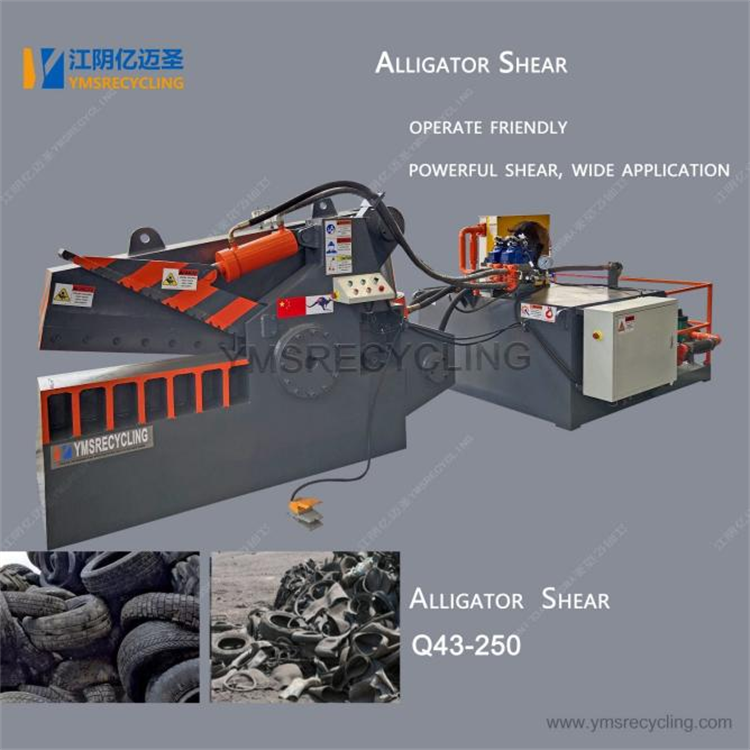
An alligator shear is a hydraulic shearing machine designed to cut scrap metal — bar, rod, pipe, structural sections, sheet, and mixed metal pieces — into shorter, more uniform pieces. The name comes from the jaw geometry: a fixed lower jaw and a hydraulically driven upper jaw that opens and closes like a crocodilian bite. The shearing action is fast, mechanically simple, and capable of cutting through ferrous and non-ferrous metals that would be impractical to cut with hand tools or slower mechanical saws. Alligator shears are the standard equipment in scrap yards, metal recycling operations, auto dismantling facilities, and non-ferrous metal processing plants where incoming scrap needs to be size-reduced before baling, briquetting, or direct furnace charging.
Understanding how alligator shears work, what determines their cutting capacity, and what specifications to evaluate when selecting a machine saves high cost and downtime versus the common mistake of choosing a machine by price alone, without matching it to the actual feedstock.
Content
How an Alligator Shear Works
The operating principle is straightforward. The lower jaw is fixed — it is the base of the machine and does not move. The upper jaw is connected to a hydraulic cylinder mounted above the cutting zone. When the operator activates the shear (typically with a foot pedal or hand lever), hydraulic pressure drives the upper jaw downward, applying a concentrated shearing force at the blade edge that exceeds the shear strength of the metal being cut. The upper jaw then returns to the open position for the next piece.
The cutting blades — also called knives or shear blades — are the working elements of the machine. They are typically made from high-hardness tool steel (commonly D2 or similar grades at HRC 58–62) and are bolted into the jaw so they can be removed and replaced when worn or damaged. Blade geometry affects the quality of the cut and the force required: tighter blade clearance produces a cleaner cut but increases wear rate; looser clearance reduces wear but produces a more ragged cut end and can cause the material to deform rather than shear cleanly.
The machine's table — the flat surface on which scrap is positioned before shearing — is typically fitted with rollers or a V-groove guide channel to support long sections of bar or pipe and position them correctly under the blade. On larger machines, a hydraulic hold-down clamp automatically grips the material before the blade descends, preventing the piece from moving or deflecting during the cut. This is particularly important for long, light sections that would otherwise be pushed rather than cut by the descending blade.
Key Performance Specifications
Maximum Shearing Force
Shearing force — measured in tons or kilonewtons — is the primary capacity specification. It determines the maximum cross-sectional area of metal the machine can cut in a single stroke. However, shearing force alone doesn't fully describe capacity because the required force depends on both the cross-sectional area being cut and the material's shear strength. A 200-ton machine can cut larger cross-sections of soft aluminum than of hardened steel, because the required force per unit area differs between materials.
For practical use, machine specifications typically list maximum cutting capacity as a diameter or cross-section dimension for common materials: for example, "maximum round bar diameter 100mm in Q235 steel" or "maximum pipe diameter 120mm." These rated capacities assume the material is in its standard annealed or as-delivered condition — cold-worked, hardened, or high-strength alloy material requires more force and may exceed the machine's capacity at the same nominal section size.
Cycle Speed
Cycle speed — the number of cuts per minute — determines processing throughput. A machine that can make 20 cuts per minute with a 2-second return stroke can process significantly more material per shift than a slower machine of equivalent cutting force. For operations processing high volumes of uniform feedstock (rebar ends, pipe cut-offs, sorted bar material), cycle speed directly affects hourly throughput. Hydraulic pump flow rate, cylinder bore, and the efficiency of the hydraulic circuit determine cycle speed — faster machines typically use larger-capacity hydraulic power units with higher-flow pumps.
Opening Height
The jaw opening height limits the maximum section height of material that can be inserted. For typical bar and rod processing, opening heights of 150–250mm are adequate. For processing structural sections — I-beams, angle iron, channel — larger opening heights of 300–400mm or more are needed to accept the full section height. Machine selection must account for the tallest individual piece in the expected feedstock, not just the average.
Machine Types and Configurations
Light-Duty Alligator Shear
Machines in the 63–160 ton range are used in small scrap yards, auto dismantling operations, non-ferrous metal dealers, and light industrial applications. They handle round bar up to approximately 50–70mm diameter in mild steel, pipe, light structural sections, aluminum profiles, copper tube, and cable. These machines are compact, relatively low-powered (typically 7.5–22 kW hydraulic power units), and suited to intermittent use rather than continuous high-volume production. Their lower capital cost makes them accessible to smaller operations.
Medium-Duty Alligator Shear
Machines in the 160–400 ton range cover the majority of professional scrap metal processing applications. They handle round bar to 80–120mm in mild steel, structural sections including channel and angle iron, thick-wall pipe, and heavy non-ferrous feedstock. Power unit requirements increase to 22–55 kW. This class of machine is the workhorse of regional scrap yards, medium-volume auto shredder feeder operations, and non-ferrous processing plants.
Heavy-Duty Alligator Shear
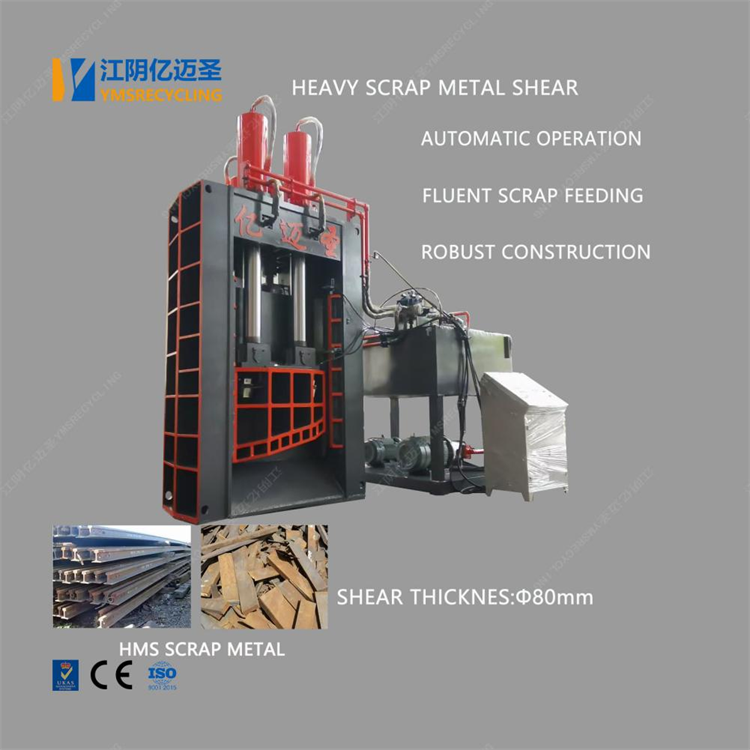
Machines above 400 tons handle very large structural sections — heavy I-beams, railroad rails, thick plate, and other oversized ferrous scrap. Power units of 75 kW and above are required. These machines are found in large-scale steelworks feedstock processing, major scrap trading operations, and demolition company facilities where large structural steel sections are a primary feedstock.
Alligator Shear vs Other Cutting Methods
| Method | Best For | Limitations | Typical Throughput |
|---|---|---|---|
| Alligator shear | Bar, rod, pipe, structural sections, mixed ferrous/non-ferrous | Cannot cut a flat sheet efficiently; limited to manageable section sizes | High — 5–20 cuts/min depending on size |
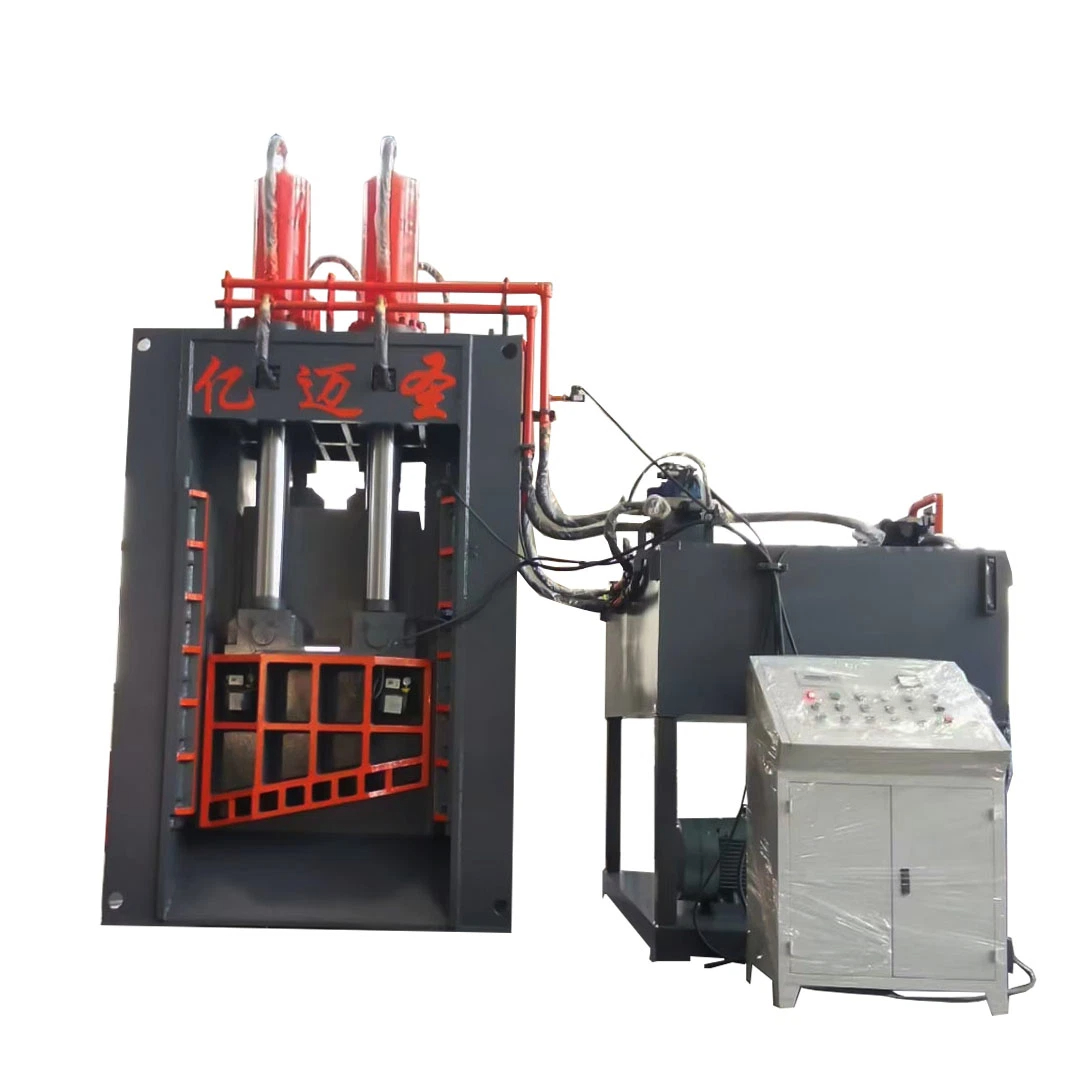
| Hydraulic guillotine shear | Flat sheet, plate, thin sheet bundles | Not suited for round or structural sections | High for sheet; slow for mixed scrap |
| Metal baler/shear combination | High-volume loose light scrap, auto bodies | Expensive; requires volume to justify | Very high at scale |
| Plasma/oxy-fuel cutting | Very large sections, complex shapes, demolition | Slow, consumable cost high, operator skill required | Low — suitable for individual large pieces |
| Circular saw / cold saw | Precision cut-to-length for valuable alloys | Slow, blade wear, not suited for contaminated scrap | Low — clean cuts, not high-volume scrap |
What to Check When Specifying an Alligator Shear
Feedstock characterization before purchase prevents the most expensive mistake: buying a machine that is marginally undersized for the actual material being processed. Define the maximum cross-sectional dimension (diameter for round, flange width for structural sections) and the material type and condition (mild steel, alloy steel, stainless, aluminum, copper) of the most demanding material in the expected feedstock. Apply a safety factor of at least 20–30% to the catalog cutting capacity when specifying against your hardest material, because catalog ratings are typically based on standard mild steel, and actual scrap is rarely perfectly conditioned.
Blade accessibility and replacement ease are practical long-term cost considerations that are often underweighted in initial purchase decisions. Blades in an alligator shear wear progressively and require replacement periodically, depending on usage intensity and feedstock hardness. Machines with simple bolted blade retention that can be changed with standard tools in under an hour have meaningfully lower maintenance labor cost over their service life than designs that require partial machine disassembly for blade replacement.
Hydraulic system quality — pump brand, oil tank capacity, and cooling system — determines the machine's sustained operating performance. A machine sized correctly for its rated capacity but with an undersized hydraulic power unit, will slow down and reduce cycle speed when run continuously due to hydraulic oil heating. Confirm that the hydraulic oil cooling system is rated for the expected ambient temperature at the installation location, particularly in warm climates or indoor installations without ventilation.
Frequently Asked Questions
Can an alligator shear cut stainless steel and aluminum as well as mild steel?
Yes, but capacity ratings differ significantly by material. Stainless steel has higher shear strength than mild steel (approximately 60–70% higher for austenitic grades like 304/316), which means a machine rated for 100mm mild steel round bar may only safely cut 70–75mm stainless steel round bar. Aluminum has lower shear strength than mild steel, so the same machine can cut larger aluminum sections — typically 1.5–2× the mild steel capacity by diameter. When your operation processes significant volumes of stainless or high-alloy material, verify the machine's rating specifically for those materials rather than assuming the mild steel rating applies.
How often do alligator shear blades need to be replaced?
Blade replacement frequency depends on usage intensity, feedstock hardness and cleanliness, and blade material quality. In a light to medium-duty scrap yard processing primarily mild steel bar and structural sections, quality high-hardness blades typically last 2–6 months before requiring replacement or reconditioning. Processing harder materials (stainless, alloy steel), abrasive contamination (sand, rock, scale-covered scrap), or operating at very high cycle rates accelerates blade wear significantly. Most operations establish a blade inspection schedule based on their experience and replace blades when the blade clearance or edge condition causes cut quality to visibly degrade. Maintaining a spare set of blades on-site avoids unplanned downtime when a blade chips or requires replacement unexpectedly.
What safety features should a production alligator shear have?
A two-hand control or foot pedal with a guard is the minimum — the operator's hands must be clear of the cutting zone before the blade can descend. Machines for continuous production use should have a physical barrier guard that prevents access to the cutting zone during operation, not just a control interlock that relies on operator compliance. An automatic hold-down clamp that secures the material before cutting prevents pieces from flying out sideways or being pushed rather than cut. Emergency stop accessible from the operator position and from the material feed side. For CE-marked machines (required for sale into the European market), these safety features are mandated under the Machinery Directive; for other markets, verify compliance with local equipment safety regulations before purchase.