 English
 русский
 Español

Content
- 1 Heavy Scrap Metal Shear Machines Are the Backbone of Large-Scale Recycling
- 2 Understanding the Core Mechanics and Working Principles
- 3 Primary Applications Across the Scrap Supply Chain
- 4 Key Advantages Over Alternative Processing Methods
- 5 Essential Features That Define a High-Quality Machine
- 6 Configuration Types: Selecting the Right Layout
- 7 Economic Impact and Return on Investment
- 8 Critical Maintenance Protocols for Longevity
- 9 Future Trends in Heavy Shearing Technology
- 10 Safety Protocols That Cannot Be Ignored
Heavy Scrap Metal Shear Machines Are the Backbone of Large-Scale Recycling
A heavy scrap metal shear machine is the most critical investment for any large-scale metal recycling facility aiming to maximise processing efficiency, ensure operator safety, and produce high-density, transport-ready scrap bales and cuts. When dealing with massive volumes of industrial waste, end-of-life vehicles, demolition debris, and structural steel, traditional manual cutting methods or light-duty equipment simply cannot cope with the sheer volume and toughness of the materials. A heavy-duty shear eliminates these bottlenecks by applying immense hydraulic force to slice through thick steel like butter, transforming unwieldy piles of scrap into uniform, manageable pieces. This upfront investment pays for itself rapidly through drastically reduced labour costs, lower transportation expenses due to increased density, and a much higher throughput rate. For any operation processing hundreds or thousands of tons of metal monthly, this machinery is not a luxury, but an absolute operational necessity.
Understanding the Core Mechanics and Working Principles
To fully appreciate the value of a heavy scrap metal shear machine, it is essential to understand how it functions under the hood. Unlike mechanical shears that rely on flywheels and electric motors to generate sudden impact force, modern heavy shears are predominantly hydraulic. They utilise a complex system of pumps, valves, and cylinders to multiply force smoothly and consistently.
The Hydraulic Powertrain
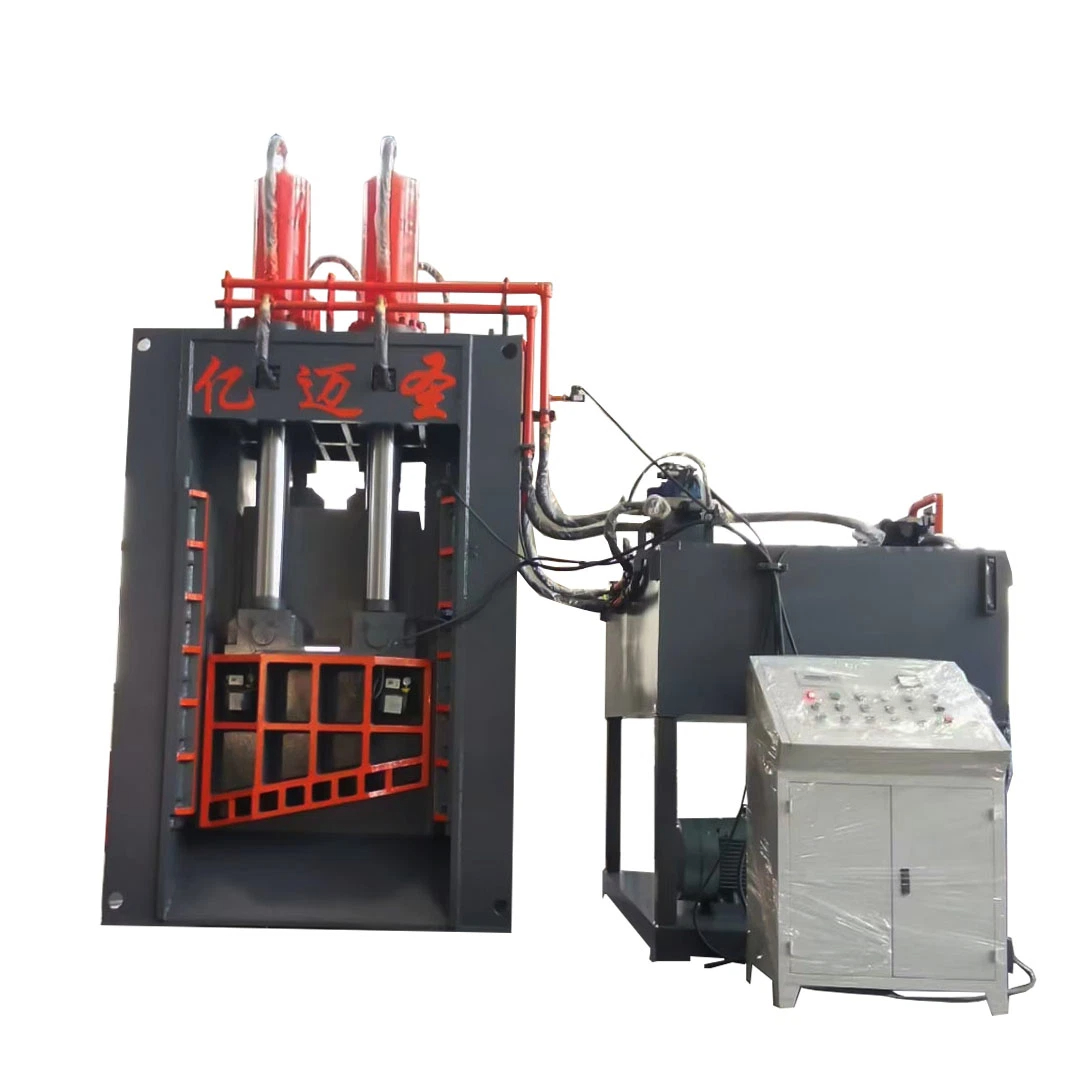
The heart of the machine is its hydraulic power unit. A large electric motor drives multiple high-pressure hydraulic pumps. These pumps push specialised hydraulic fluid through a network of heavy-duty hoses and valves into massive hydraulic cylinders. The fluid pressure is converted into a linear mechanical force by the cylinders. Because hydraulic systems can multiply force exponentially using different cylinder diameters, these machines can easily generate thousands of tons of cutting force, allowing the fixed and moving blades to cleanly sever solid steel beams, thick plate, and bundled car bodies.
The Cutting and Compression Sequence
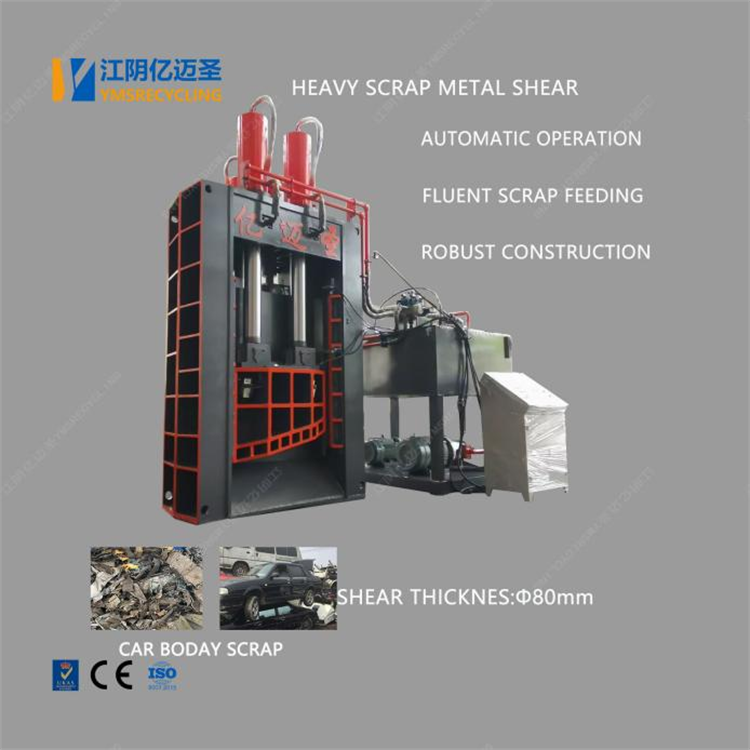
The operation follows a precise, automated sequence designed for maximum efficiency and safety. First, the scrap material is loaded into a large receiving box, typically using a grapple crane. Once loaded, a heavy compression lid (or wing) descends. This pre-compression step is vital; it flattens the scrap and holds it tightly in place, preventing the material from shifting or kicking back when the blade engages. After the material is sufficiently compressed, the moving blade, which is angled to provide a slicing rather than a blunt impact action, pushes through the metal. The angled blade ensures that the cutting force is applied progressively along the length of the cut, reducing the peak power requirement and extending the life of the cutting edge.
Primary Applications Across the Scrap Supply Chain
Heavy scrap metal shear machines are incredibly versatile, designed to handle the toughest materials found across various sectors of the scrap supply chain. Their robust construction allows them to process materials that would destroy lesser equipment.
- End-of-Life Vehicles (ELV): After being depolluted and shredded or flattened, car bodies are often fed into heavy shears to be cut into strict furnace-sized lengths, ensuring they meet the strict specifications of steel mills.
- Demolition and Construction Scrap: Heavy structural steel beams, massive columns, and reinforced concrete rebar from torn-down buildings are effortlessly sliced into transportable sections.
- Industrial Manufacturing Offcuts: Factories producing heavy machinery, shipbuilding components, or large steel plates generate massive, thick offcuts that require heavy shearing to be reclaimed.
- Mixed Heavy Meltable Scrap: Operations often receive tangled piles of thick-walled pipes, railway tracks, and heavy machinery parts that must be downsized before they can be loaded into foundry furnaces.
Key Advantages Over Alternative Processing Methods
While scrap yards have several options for downsizing metal, the heavy shear stands out for several distinct reasons that directly impact a facility's bottom line. Comparing it to alternatives like shredding or torch cutting highlights its unique value proposition.
Superiority to Shredding in Specific Scenarios
Although scrap metal shredders are excellent for processing light to medium scrap like car bodies and white goods, they struggle with heavy, solid, and high-carbon steel. Feeding large solid steel shafts or thick plates into a shredder can cause catastrophic damage to the hammers and rotors. A heavy shear handles these solid, challenging materials without the risk of catastrophic component failure. Furthermore, shears produce a clean, uniform cut length, which is sometimes preferred by steel mills over the randomised fist-sized pieces produced by shredders, especially for specific electric arc furnace (EAF) charging baskets.
Efficiency Compared to Manual Torch Cutting
Historically, thick scrap was cut using oxy-acetylene torches. This method is incredibly slow, labour-intensive, and environmentally detrimental. Torch cutting releases massive amounts of toxic fumes and consumes costly consumables (oxygen and acetylene gases). It also leaves an uneven, slag-covered edge that adds unnecessary weight (slag) to the load. A heavy shear cuts mechanically, requiring only electrical power and hydraulic fluid. It operates at a speed that far outpaces manual labour, eliminates harmful gas emissions, and produces a clean, smooth edge without residual slag, ensuring the buyer pays for pure steel, not burnt waste.
Essential Features That Define a High-Quality Machine
Not all heavy scrap metal shear machines are created equal. The harsh operating environment—characterised by extreme shock loads, constant metal dust, and heavy vibrations—demands specific engineering features to ensure longevity and consistent performance.
- Hardened, Replaceable Blade Inserts: The cutting blades endure the most severe abuse. Premium machines utilise high-alloy tool steel blades that can be flipped and resharpened multiple times before needing replacement, drastically reducing long-term operational costs.
- Reinforced Welded Main Frame: The frame must absorb millions of pounds of cutting force without flexing. High-quality shears feature heavily ribbed, stress-relieved steel weldments that prevent structural fatigue and cracking over years of use.
- Advanced PLC Control Systems: Modern machines are operated via intuitive Programmable Logic Controllers. These systems allow operators to adjust compression pressure, cutting speed, and blade overlap, while also providing diagnostic data to predict maintenance needs before failures occur.
- Integrated Safety Mechanisms: Safety is paramount. Essential features include interlocked safety gates, emergency stop palm buttons located at multiple access points, and automatic shutdown sequences if hydraulic pressure drops unexpectedly or if the blade encounters an uncuttable obstruction.
Configuration Types: Selecting the Right Layout
When evaluating a heavy scrap metal shear machine for a facility, one of the most important decisions is selecting the correct configuration. The layout dictates how material flows through the yard and how the machine integrates with existing equipment like cranes and conveyor belts.
Three-Dimensional Shear (3D)| Configuration Type | Material Flow | Ideal Yard Layout |
|---|---|---|
| Inclined Shear | Material is fed at an angle; cut pieces slide out by gravity | Facilities with limited ground space, relying on a single crane |
| Horizontal Shear | Material fed horizontally; cut pieces pushed out onto a discharge conveyor | High-volume yards with automated conveyor feeding systems |
| Features a hold-down and side compression to pre-compress material into dense blocks before cutting | Yards processing fluffy, low-density scrap like car bodies and tin |
Economic Impact and Return on Investment
Purchasing a heavy scrap metal shear machine represents a significant capital expenditure. However, facility managers must view this through the lens of long-term economic return. The financial benefits extend far beyond simply cutting metal faster.
Maximising Transport Payloads
Loose, unprocessed scrap is incredibly inefficient to transport. A standard shipping container or open-top trailer filled with loose structural steel contains more air than metal. By shearing and optionally baling the scrap, facilities can increase the payload weight per truck by a substantial margin. This directly translates to lower freight costs per ton shipped to the end mill or foundry, significantly boosting the profit margin on every load.
Achieving Premium Pricing at the Mill
Steel mills and foundries have strict charging requirements for their electric arc furnaces and blast furnaces. Material that is too long, too bulky, or irregularly shaped disrupts the automated charging systems and can cause dangerous bridging inside the furnace. Scrap that is cleanly sheared to a uniform, specified length commands a premium price over loose or oversized scrap. By producing a mill-ready product, the recycling facility elevates its position in the supply chain, moving from a low-margin broker to a high-margin processor.
Labor Reduction and Throughput Scaling
A single heavy shear, operated by just one or two skilled workers using a grapple, can process more scrap in an hour than an entire crew of manual torch cutters could process in a full day. This massive reduction in manual labour allows facility owners to reassign workers to more valuable tasks, such as sorting and quality control, while safely scaling up their daily intake capacity. The ability to process higher volumes means the facility can take on larger contracts and accept more inbound material without linearly increasing payroll costs.
Critical Maintenance Protocols for Longevity
Even the most heavily engineered heavy scrap metal shear machine will succumb to premature wear and catastrophic failure if neglected. A strict, proactive maintenance regimen is non-negotiable for protecting this vital asset.
- Hydraulic Fluid Management: The hydraulic fluid is the lifeblood of the system. Regular oil analysis should be conducted to check for particulate contamination, water ingress, and chemical degradation. Filters must be changed strictly according to the manufacturer's schedule, and the fluid should be fully replaced when it loses its optimal viscosity or anti-wear properties.
- Blade Maintenance and Adjustment: Cutting blades must be inspected daily for chipping or dulling. Dull blades require the machine to work harder, putting excessive strain on the hydraulic system and the main frame. Blades should be routinely ground or flipped to utilise fresh edges, and the clearance between the moving and fixed blades must be precisely adjusted to prevent the metal from folding over instead of shearing cleanly.
- Lubrication of Pivot Points: The massive hinges and pivot points that connect the compression lid and the cutting blade to the main frame operate under extreme loads. An automated, centralised greasing system is highly recommended to ensure these critical joints receive a constant supply of high-pressure grease, preventing metal-on-metal friction that leads to excessive play and eventual structural failure.
- Structural Inspections: Operators should regularly inspect the main weldments, especially near the blade mounting areas and hydraulic cylinder anchoring points, for the development of stress cracks. Catching a small crack early and welding it properly can prevent a catastrophic frame failure that would take the machine offline for weeks.
Future Trends in Heavy Shearing Technology
The recycling industry is continuously evolving, driven by environmental regulations and the demand for greater efficiency. Heavy scrap metal shear machines are advancing alongside these trends, incorporating new technologies to further enhance their capabilities.
Integration of Smart Sensors and IoT
The future of heavy shearing lies in predictive maintenance through the Internet of Things (IoT). Modern machines are being equipped with arrays of sensors that monitor hydraulic pressure spikes, oil temperature, vibration frequencies, and electrical current draw in real-time. This data is transmitted to cloud-based platforms that use algorithms to predict component failures before they happen. For example, the system might detect a slight, abnormal vibration in a hydraulic pump bearing, alerting the maintenance team to replace the bearing during a scheduled weekend shutdown rather than suffering an unexpected breakdown on a Wednesday afternoon.
Energy Recovery Systems
Heavy shears require massive amounts of electrical power, particularly during the cutting stroke when the hydraulic pressure spikes. To mitigate this energy consumption, advanced machines are beginning to utilise energy recovery systems. When the large compression lid descends, or the cutting blade retracts, the hydraulic fluid flowing back to the tank carries significant residual energy. Instead of just venting this energy as heat through a relief valve, regenerative circuits capture this energy to charge accumulators or assist the electric motor during the next high-power cutting stroke, resulting in a measurable reduction in overall power consumption.
Safety Protocols That Cannot Be Ignored
Operating a heavy scrap metal shear machine involves inherent dangers. The forces involved are sufficient to instantly crush heavy steel, meaning any human error can be fatal. A strong safety culture, backed by rigid protocols, is the only acceptable way to operate these machines.
The most critical rule is the absolute prohibition of personnel entering the shear box while the machine is operational, or even while it is merely powered on. All clearing of jammed material or adjustment of blades must only be performed under a strict Lockout/Tagout (LOTO) procedure. This involves physically removing the power source, locking the electrical panel, and tagging it with the name of the person performing the work, ensuring the machine cannot be accidentally energised by a coworker.
Furthermore, operators must be trained to recognise the signs of uncuttable material. Items like solid alloy tool steel blocks, large diameter high-strength shafts, or non-ferrous metals embedded in the scrap can exceed the shear's rated capacity. Forcing the machine to cut these items can cause the blade to shatter, sending high-velocity shrapnel across the yard. Operators must be empowered to stop the cycle, reverse the material, and safely remove uncuttable obstructions before proceeding. Regular, documented safety training and the use of high-visibility personal protective equipment (PPE) complete the framework necessary to ensure that the machine remains a profitable asset rather than a workplace hazard.