 English
 русский
 Español

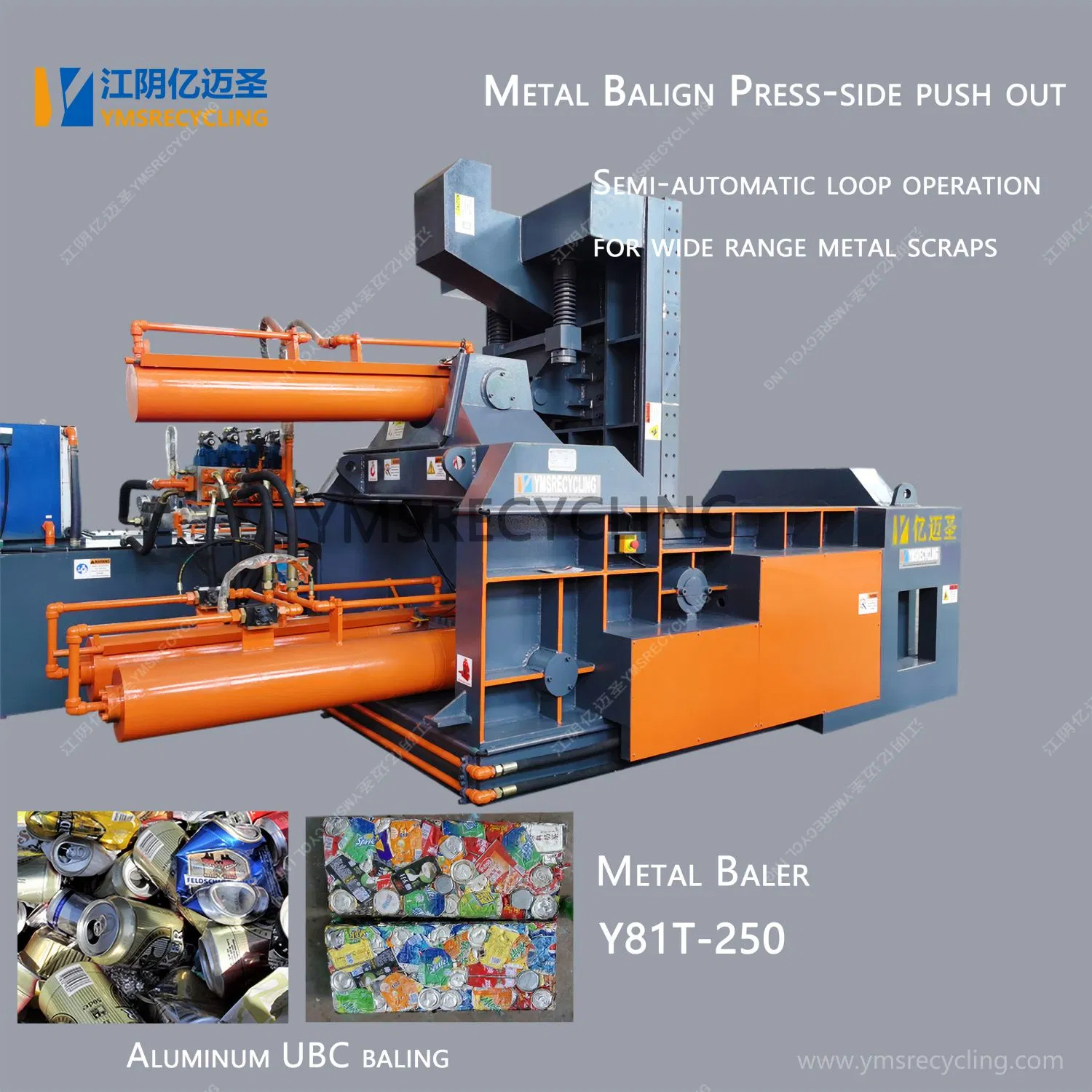
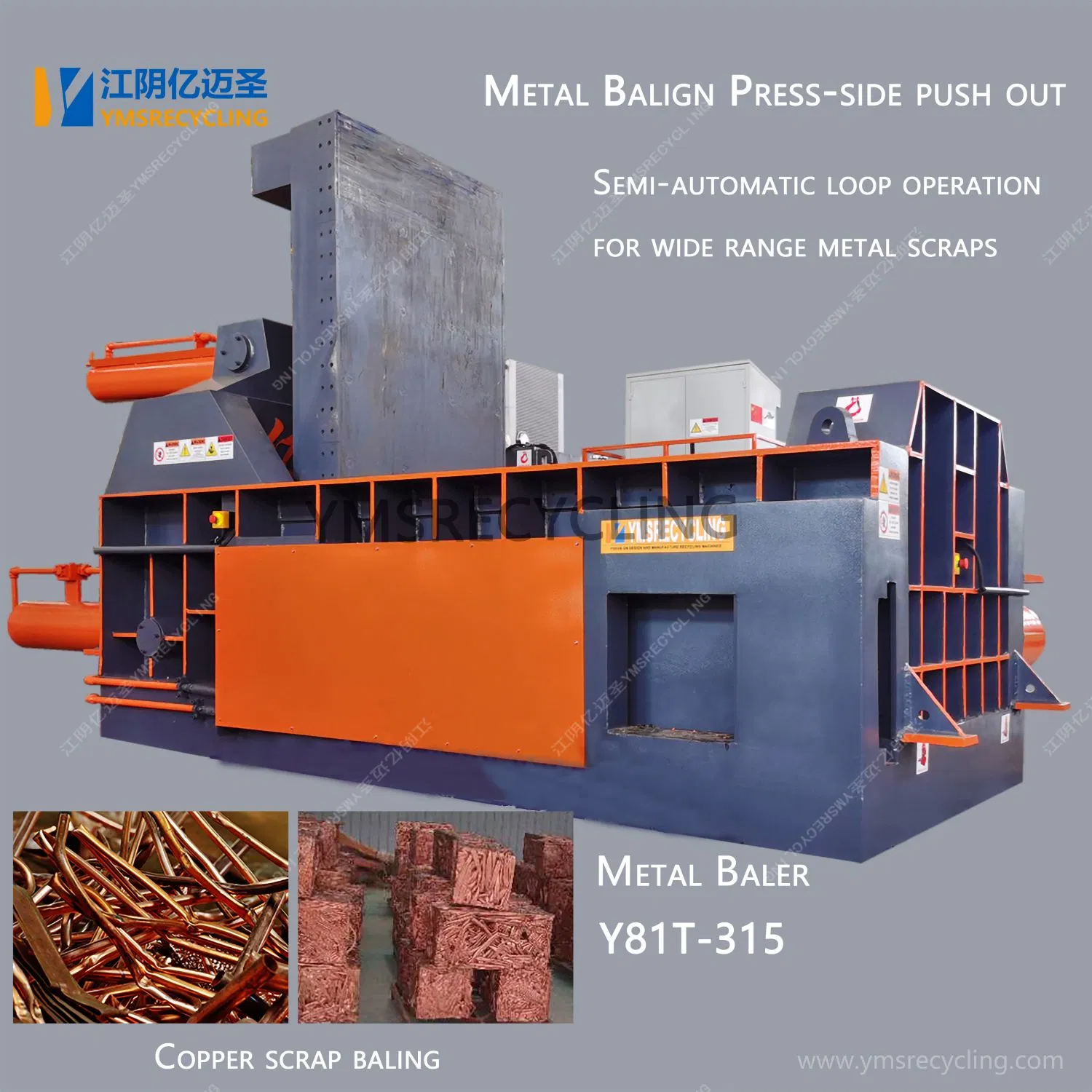
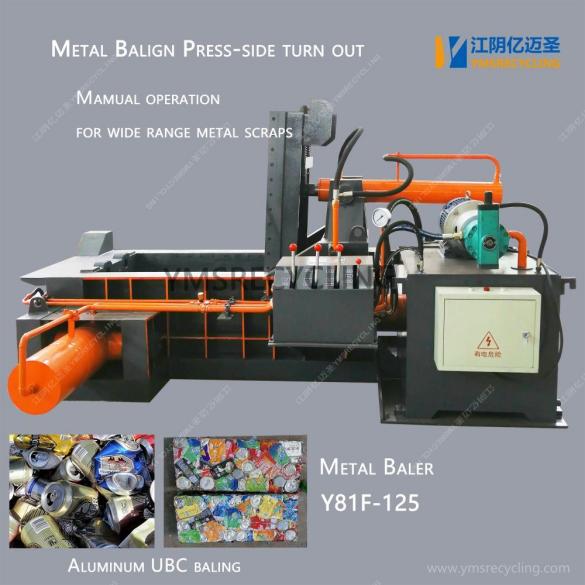
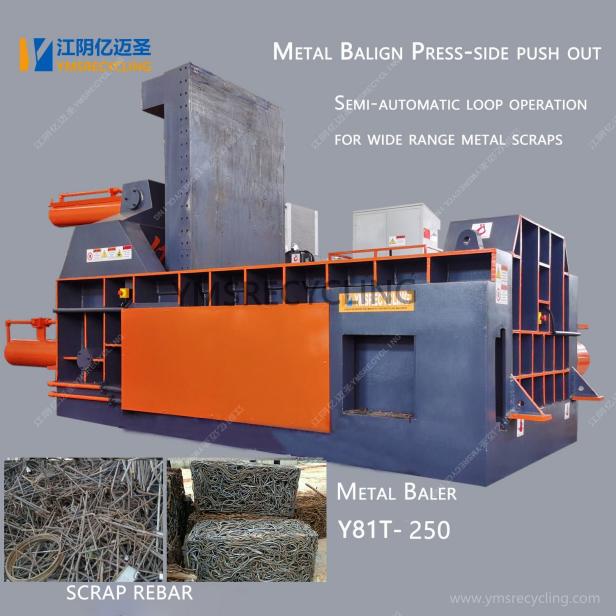
Custom metal baler machine stands as a tailored industrial compression device specially developed for diversified metal waste processing demands in modern manufacturing, recycling and metal processing industries. Different from standard general baling equipment, this customised model can adjust structural parameters, compression modes, feeding methods and overall specifications according to actual production conditions, site space and material characteristics of different enterprises. In the overall industrial waste recycling system, custom metal baler equipment can effectively reduce the occupied volume of scattered metal materials by more than 60%, which fundamentally solves the storage and transportation difficulties caused by loose metal scraps, metal fragments and leftover metal raw materials.
Metal waste involved in industrial production covers a wide range of types, including light thin metal sheets, thick metal profiles, scrap steel, aluminium scraps, copper leftovers and alloy fragments. Conventional baling machines often have single compression performance, which is difficult to adapt to mixed metal processing or special material molding requirements. The customised metal baler breaks through the limitation of standardised equipment in design, and realises targeted optimisation for material hardness, thickness, density and physical properties. While improving the baling efficiency, it also ensures the stability of compressed material blocks, avoids loose scattering during handling and secondary processing, and creates a more orderly and efficient operation mode for the entire metal recycling link.
In terms of economic benefit output, the rational application of a custom metal baler machine can greatly reduce the comprehensive operating cost of enterprises. The reduced volume of metal materials means fewer vehicles and lower logistics consumption, and regular compression and packaging can also improve the overall recycling value of waste metals. Dense and regular metal bales are more favoured by downstream recycling and smelting enterprises, with the average transaction value increased by a stable proportion compared with uncompressed loose materials. For small and medium-sized processing plants and large-scale industrial production bases, this customised equipment has become an essential core facility to balance production efficiency, environmental protection compliance and economic income.
Content
- 1 Main Customized Design Dimensions of Metal Baler Equipment
- 2 Common Application Scenarios of Custom Metal Baler Machine
- 3 Advantages of Choosing a Custom Metal Baler Over Standard Equipment
- 4 Key Points for Custom Metal Baler Machine Selection and Scheme Formulation
- 5 Future Development Trend of Custom Metal Baler Equipment
Main Customized Design Dimensions of Metal Baler Equipment
Material Adaptation Customisation
Material adaptation is the most core customised direction of the custom metal baler machine. Different metal raw materials have huge differences in hardness, ductility and structural form, which directly affect the load-bearing demand and compression structure design of baling equipment. For soft non-ferrous metals such as aluminium and copper, the equipment can adopt a medium-pressure slow compression structure to prevent material deformation damage and internal fragmentation. For high-hardness scrap steel, iron blocks and alloy waste, the customized scheme will be equipped with thickened wear-resistant box body and high-power hydraulic drive system, so as to ensure that the equipment can complete stable compression under high load working conditions.
In addition to metal hardness adaptation, targeted adjustment will also be made for special-shaped metal waste. Irregular metal parts, bending profiles and fragmented stamping leftovers are easy to block the feeding port or cause uneven compression in standard equipment. The customized metal baler can optimize the feeding bin structure, add auxiliary crushing and sorting mechanisms, and set up adjustable limit components, so that various complex shaped metal wastes can smoothly enter the compression cavity and complete unified molding baling. This all-round material adaptation design greatly expands the application scope of the equipment and meets the mixed processing demand of multi-category metal waste in actual production.
Site and Structural Size Customization
The production and storage space of industrial sites varies greatly. Some recycling factories have wide open space and can place large-scale horizontal baling equipment, while small processing workshops, indoor production workshops and compact factory buildings have strict restrictions on equipment floor area, height and overall layout. Custom metal baler machine can complete personalized adjustment of overall volume, height, length and width according to the actual site layout of users, and provide vertical, horizontal, integrated and split structural forms for selection.
- Vertical customised baler: small floor area, simple operation, suitable for small workshops and decentralised processing scenarios
- Horizontal customised baler: large processing capacity, continuous feeding, matching large-scale assembly line production mode
- Split-type customised structure: convenient for segmented transportation and on-site assembly, adapting to narrow passages and complex plant environments
At the same time, the equipment outlet height, material receiving platform position and operating console layout can also be customised according to the user's on-site operation habit and supporting mechanical equipment parameters, realising seamless connection with conveyor belts, forklifts and other handling equipment, optimising the overall production flow and reducing the labor intensity of operators.
Power and Control System Customisation
The power configuration and intelligent control mode are important parts of the customised design of metal baler. According to the daily processing volume demand of enterprises, the hydraulic power system can be matched with different power units to balance energy consumption and working efficiency. Low-demand small-scale processing can adopt an energy-saving low-power configuration to reduce daily power consumption, while high-yield continuous operation scenarios need a high-power stable power supply system to ensure long-term non-stop operation of the equipment.
In terms of the control system, the custom metal baler machine supports multiple operation modes customisation, including full-automatic cycle operation, semi-automatic manual intervention operation and single-point jog control. The intelligent customised control panel can set adjustable compression time, bale thickness, pressure threshold and discharge mode, which is convenient for operators to adjust equipment parameters in real time according to material changes. In addition, the customised system can also be added with overload protection, fault alarm, automatic shutdown and safety locking functions, effectively improving the safety and stability of industrial operation.
Common Application Scenarios of Custom Metal Baler Machine
| Application Field | Main Processing Materials | Customization Focus |
|---|---|---|
| Machinery Manufacturing | Metal scraps, stamping leftovers, alloy fragments | High-pressure resistance, continuous feeding |
| Non-ferrous Metal Recycling | Aluminium chips, copper materials, and zinc leftovers | Soft compression, anti-deformation |
| Construction Demolition Recycling | Scrap steel, steel bar fragments, metal pipe fittings | Wear-resistant structure, large feeding bin |
| Hardware Processing Industry | Thin iron sheet, hardware leftover materials | Compact size, energy saving |
In the machinery manufacturing industry, a large amount of metal waste will be produced every day in the processes of cutting, stamping, drilling and polishing. These scattered metal wastes occupy a large number of factory storage spaces. The customised metal baler can be connected with the production line in a targeted way to realise timely collection and on-site baling of waste materials, avoid the accumulation of waste materials, and maintain the cleanliness and order of the production workshop. Through customised compression density settings, the formed metal bales are neat and uniform, which is convenient for centralised recycling and regular handover.
The non-ferrous metal recycling industry has higher requirements for the protection of material integrity. Non-ferrous metals such as copper and aluminium have high recycling value, and excessive extrusion will lead to material fragmentation and quality decline. The custom metal baler machine used in this field will adopt a personalised pressure regulation design to control the compression force within a reasonable range, ensure the compactness of the bales, and retain the complete physical state of the metal materials, so as to maximise the residual value of recycled metals.
For construction waste recycling and large-scale metal waste treatment scenarios, the overall structural strength and processing capacity of the equipment are the key points of customisation. A large number of thick and heavy scrap metals are mixed in construction waste, which puts forward higher requirements for the load-bearing capacity and wear resistance of the baling box. The customised thickened plate structure and reinforced hydraulic cylinder design can adapt to heavy-load working conditions for a long time, reduce equipment failure rate caused by material impact, and improve the continuous operation capacity of large-scale waste treatment sites.
Advantages of Choosing a Custom Metal Baler Over Standard Equipment
Standard metal baler equipment is designed according to universal industrial demands, with fixed structural parameters, a single function and poor environmental adaptability. In contrast, a custom metal baler machine has obvious comprehensive advantages in targeted use, long-term operation and later benefit creation, and has become the preferred equipment for more professional metal processing and recycling enterprises. First of all, customised equipment can match the user's production demand 100%, without redundant functional configuration or insufficient performance, realising accurate matching of equipment performance and actual demand, and avoiding resource waste or production bottlenecks caused by mismatched equipment.
Secondly, the service life and stability of a customised metal baler are better. In the customised design stage, manufacturers will combine the user's material types, daily working hours, working environment and load intensity to select matching materials and core components. For enterprises with long-term continuous operation, key stressed parts will be reinforced and treated with anti-wear and anti-corrosion to adapt to harsh industrial environments such as dust, moisture and heavy load. Standard equipment adopts a unified material configuration, which is easy to cause accelerated wear and frequent failures in high-intensity or special working environments, increasing later maintenance costs.
- Strong on-site adaptability, free from space limitations and layout restrictions
- Flexible function configuration, meeting the special processing requirements of special metal materials
- Low later operation and maintenance cost, long-term stable operation
- Good expansion performance, reserved interface for later production line upgrading
Moreover, the customised metal baler has better expandability and upgradability. With the continuous upgrading of industrial production standards and the adjustment of enterprise production scale, the demand for metal waste processing will also change. The reserved structural space and functional interfaces of customised equipment can support later functional upgrades, such as adding automatic feeding devices, intelligent counting systems and environmental protection dust removal components. Standard integrated baling equipment is difficult to carry out secondary transformation and upgrading, and can only be replaced as a whole when the demand changes, resulting in higher long-term input costs.
Key Points for Custom Metal Baler Machine Selection and Scheme Formulation
Clarify Core Processing Demand Parameters
Before formulating the customised scheme, enterprises need to sort out their core production demands, including the main types of metal waste, daily processing volume, required bale size and density standards. Clear demand parameters are the basis for reasonable customisation, which can prevent functional redundancy or performance deficiency in equipment design. For example, enterprises dominated by light thin metal materials can appropriately reduce hydraulic power configuration to control energy consumption, while heavy metal waste processing must focus on the structural strength and compression thrust of the equipment.
Evaluate On-site Environment and Supporting Conditions
The actual placement environment of the equipment needs to be fully evaluated, including the actual floor area, indoor height, power supply conditions, and the matching degree with peripheral conveying and handling equipment. The customised size, installation method and power access mode of the baler need to be determined according to the on-site environment. At the same time, the environmental conditions, such as dust concentration and humidity in the workshop, should be considered, and targeted anti-corrosion, dust-proof and noise reduction optimisation should be done for the equipment to improve the environmental adaptability of the equipment.
Focus on Core Component Quality and After-sales Customisation Service
The core components, such as the hydraulic system, motor, box body steel plate and control module, determine the overall quality of the custom metal baler machine. In the process of customisation, it is necessary to focus on the material selection and process standards of key components to ensure the durability and stability of long-term operation. In addition, complete after-sales service is also very important for customised equipment. Professional manufacturers can provide on-site installation and commissioning, personalised operation training and targeted after-sales maintenance services, and quickly respond to equipment adjustment and maintenance demands in the later stage, to ensure the long-term efficient operation of customised baling equipment.
Future Development Trend of Custom Metal Baler Equipment
With the continuous promotion of global circular economy and industrial environmental protection policies, the metal waste recycling industry is developing towards standardisation, intelligence and high efficiency, which also drives the continuous upgrading and optimisation of custom metal baler machines. In the future, personalised customised design will be combined with intelligent technology more closely, and more intelligent sensing elements and data monitoring modules will be integrated into the equipment. Real-time monitoring of compression pressure, equipment operating temperature and material processing volume will be realised, providing data support for enterprise production management and energy consumption optimisation.
Energy-saving and low-carbon design will also become an important development direction of the customised metal baler. Through the optimisation of hydraulic loop design and power matching scheme, the invalid energy consumption in the operation process will be reduced, and the energy utilisation efficiency of the equipment will be improved. At the same time, the application of new wear-resistant and lightweight materials will further optimise the structural design of the equipment, reduce the overall equipment weight on the premise of ensuring structural strength, and reduce the difficulty of transportation, installation and daily maintenance.
In terms of functional customisation, multi-functional integrated design will become mainstream. The future custom metal baler will integrate the functions of automatic feeding, sorting, compression, binding and discharging, and can independently complete the whole process of metal waste processing. The personalised customisation will no longer be limited to size and pressure adjustment, but will realise the overall customised solution design around the whole metal waste recycling process, helping industrial enterprises build a more complete, efficient and environmentally friendly metal resource recycling system.
In general, a custom metal baler machine, as a professional customised environmental protection and industrial equipment, has irreplaceable application value in the field of metal waste treatment. Through reasonable personalised customisation, it can not only solve the practical problems of material storage, transportation and recycling for enterprises, but also help enterprises meet environmental protection production standards, reduce comprehensive operating costs and create higher resource recycling benefits. With the continuous improvement of industrial processing requirements, the market demand for high-precision, intelligent and multi-functional customised metal balers will continue to grow, and promote the iterative progress of the entire metal recycling processing industry.