 English
 русский
 Español

Content
- 1 1. Introduction to Industrial Briquetting Machinery
- 2 2. Fundamental Working Principles of Hydraulic and Mechanical Presses
- 3 3. Key Engineering Differences between Hydraulic and Mechanical Systems
- 4 4. Material Compatibility and Application Suitability
- 5 5. Performance and Throughput Comparison Visualized
- 6 6. Structural Energy Consumption and Operational Efficiency
- 7 7. Maintenance Requirements, Wear Parts, and Reliability
- 8 8. Operational Safety, Automation, and Modern Control Systems
- 9 9. Economic Investment and Total Cost of Ownership (TCO) Analysis
- 10 10. Final Selection Matrix for Industrial Buyers
- 11 11. Frequently Asked Questions (FAQ)
- 11.0.1 Q1: What moisture content is ideal for operating a briquetting press machine?
- 11.0.2 Q2: Are binding chemicals required to form dense briquettes?
- 11.0.3 Q3: How much volume reduction can be expected from a briquetting press?
- 11.0.4 Q4: How do briquetting press machines help scrap metal recyclers increase profits?
- 11.0.5 Q5: What is the typical service life of main wear components?
- 12 12. Industry References and Technical Standards
1. Introduction to Industrial Briquetting Machinery
Industrial waste management and resource recovery have become critical drivers of operational efficiency in modern manufacturing. Metal processing, woodworking, paper recycling, and agricultural processing generate immense volumes of loose residue every day. Loose swarf, metal turnings, sawdust, and biomass waste present significant logistical challenges. They occupy vast storage space, create fire and environmental hazards, and incur high transport costs. The briquetting press machine solves these challenges by converting loose, low-density materials into high-density, uniform blocks or logs. This process dramatically reduces volume, retains valuable processing fluids like cutting coolants, and turns low-value waste streams into profitable secondary commodities.
Selecting the correct briquetting press machine depends heavily on the driving mechanism of the system. While various custom designs exist, the industrial market is dominated by two primary technologies: Hydraulic Briquetting Press Machines and Mechanical Briquetting Press Machines. Both machine types achieve the fundamental goal of density transformation, but they rely on fundamentally different mechanical principles, exert pressure in distinct ways, and cater to completely different material characteristics. Understanding these technical nuances is essential for plant managers, process engineers, and procurement directors looking to optimize capital equipment investments.
This technical comparative analysis evaluates hydraulic and mechanical briquetting press machines across mechanical engineering principles, material handling flexibility, energy consumption profiles, maintenance demands, and operational expenditure. By examining key performance indicators, industrial buyers can select the precise machinery suited to their waste profile and operational throughput requirements.
2. Fundamental Working Principles of Hydraulic and Mechanical Presses
The operational mechanics of hydraulic and mechanical briquetting machines govern how force is applied to raw waste materials. The underlying fluid dynamics or mechanical linkages dictate pressure dwell times, stroke speed, density consistency, and system durability.
2.1 Mechanics of Hydraulic Briquetting Presses
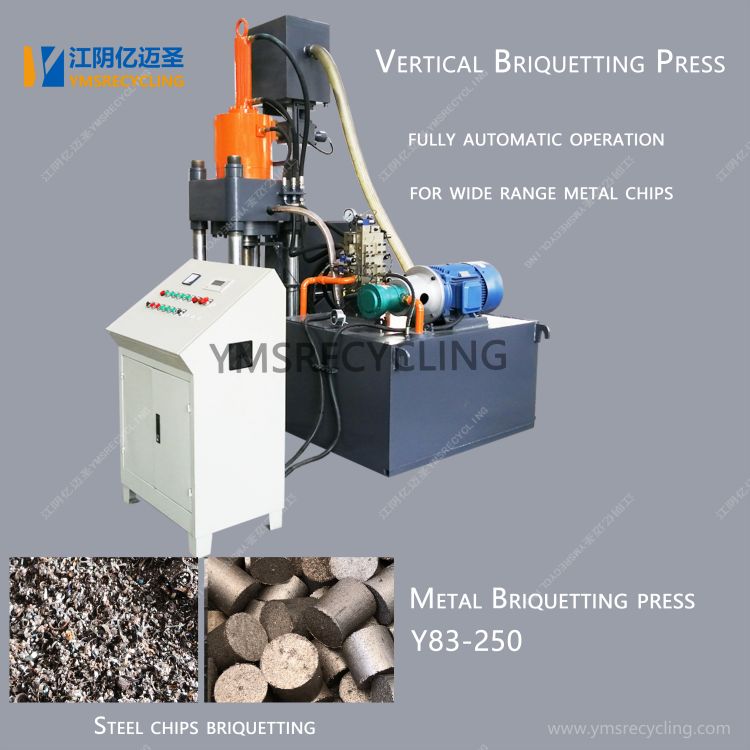
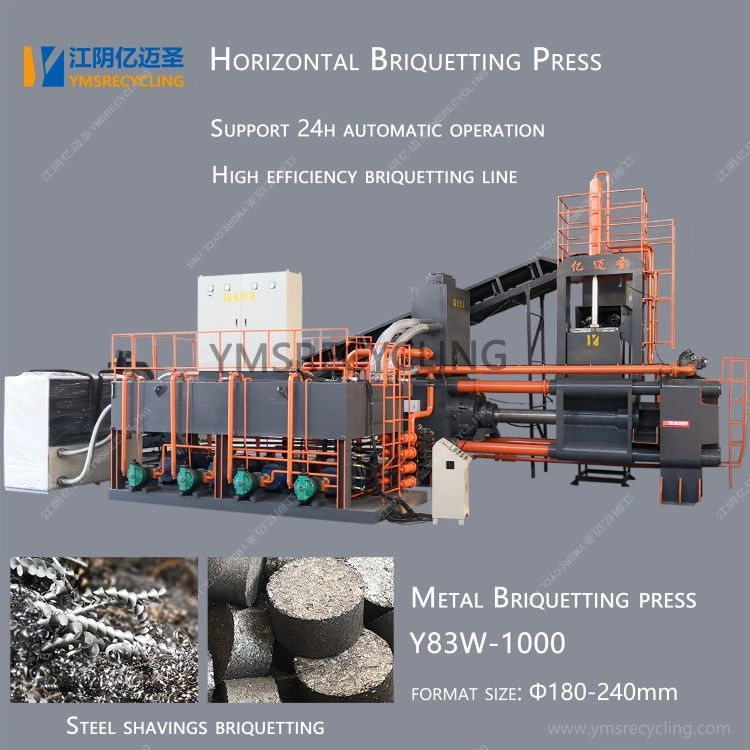
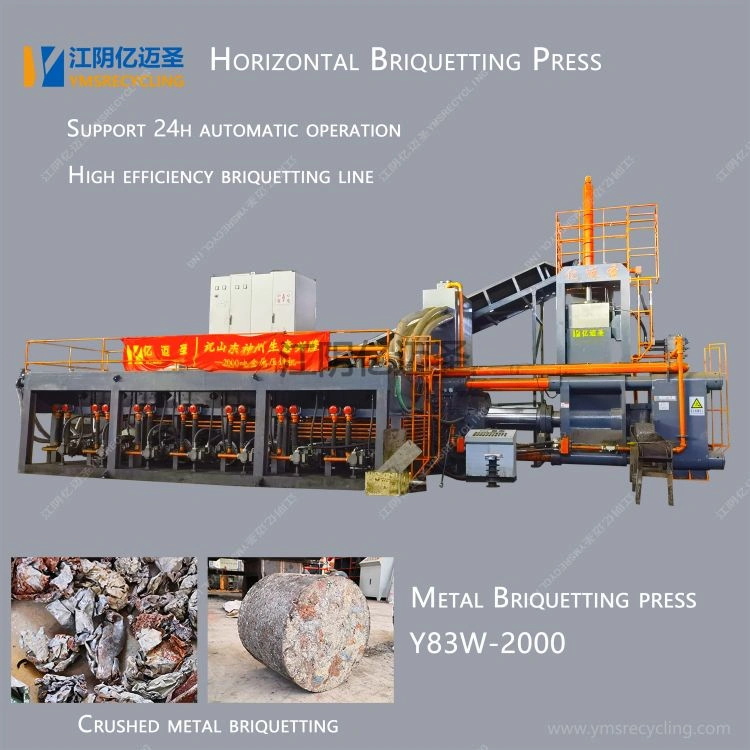
A hydraulic briquetting press machine uses pressurized hydraulic fluid to drive heavy-duty pistons within reinforced cylinders. Electric motors power high-pressure hydraulic pumps, pushing hydraulic oil into the cylinder chamber. As the piston advances, it compresses raw material within a precision-machined die box. Hydraulic systems excel at delivering continuous, adjustable pressure throughout the entire length of the stroke. The machine holds the maximum compression force at the end of the stroke, known as pressure dwell time. This dwell period allows elastic materials like fine metal chips or fluffy dust to deform permanently and bond without requiring excessive binder agents.
2.2 Mechanics of Mechanical Briquetting Presses
Conversely, a mechanical briquetting press machine operates on kinetic energy storage and mechanical leverage. Often referred to as a mechanical fly-wheel or ram press, this design utilizes an electric motor to rotate a massive, balanced flywheel. The rotating kinetic energy is transferred through a crankshaft or eccentric shaft mechanism, driving a horizontal ram rapidly forward and backward inside a tapered pressing chamber. Pressure in a mechanical press peaks instantaneously at the bottom dead center of the crank stroke. The compression force relies heavily on the momentum of the moving ram and the backpressure generated by continuous material friction inside the long die nozzle.
Due to these contrasting mechanical principles, hydraulic presses excel at precision compression, variable pressure management, and handling elastic or oily metal residues. Mechanical presses excel at high-speed, continuous mass production of uniform, long briquettes, particularly when processing dry wood waste or agricultural biomass residues.
3. Key Engineering Differences between Hydraulic and Mechanical Systems
To understand how these systems compare from an engineering perspective, it is useful to inspect their mechanical configurations, press characteristics, and primary functional parameters.
| Engineering Attribute | Hydraulic Briquetting Press Machine | Mechanical Briquetting Press Machine |
|---|---|---|
| Force Generation Mechanism | Fluid dynamics via hydraulic oil pumps and cylinders | Kinetic energy storage via flywheel and mechanical crankshaft |
| Pressure Application Profile | Adjustable constant pressure with customizable dwell time | Instantaneous peak pressure at bottom dead center of stroke |
| Compression Speed (Strokes/Min) | Low to Medium (6 to 20 cycles per minute) | High (180 to 270 cycles per minute) |
| Briquette Form and Geometry | Discrete cylindrical pucks or block shapes | Continuous dense logs, pucks, or solid rods |
| Pressure Control Precision | Highly precise; monitored and adjusted via hydraulic sensors | Fixed mechanical stroke; adjusted via die tapers and friction |
| Fluid and Coolant Recovery | Exceptional; integrated liquid drain channels and deep pressing | Limited; high heat generates steam, best suited for dry feedstocks |
| Acoustic Noise Levels | Low to moderate (Quiet fluid power mechanisms) | High operational impact noise (Reciprocating ram and flywheel) |
| Thermal Generation | Low material thermal build-up during cycle | Extremely high friction heat generated in the compression tube |
4. Material Compatibility and Application Suitability
Material physical characteristics such as particle size, moisture content, elastic memory, oil content, and abrasive hardness dictate machine selection. Using the wrong press mechanism for a specific material profile leads to low block density, machine jamming, or accelerated component wear.
4.1 Metal Waste Processing and Fluid Recovery
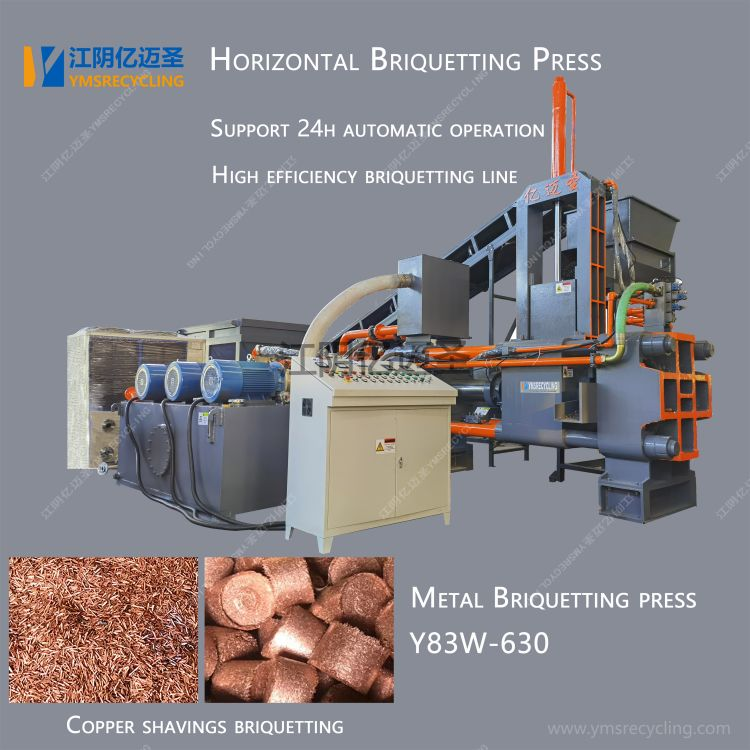
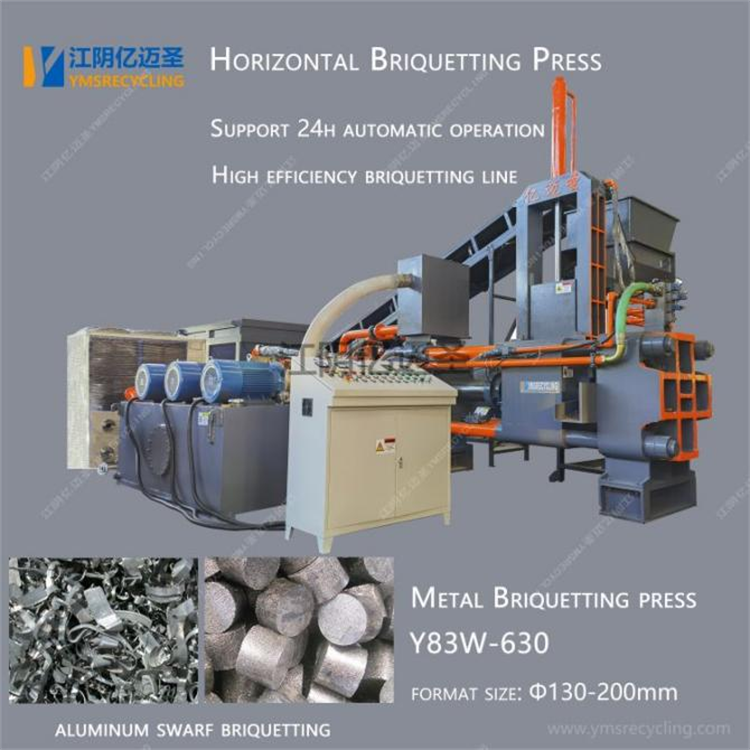
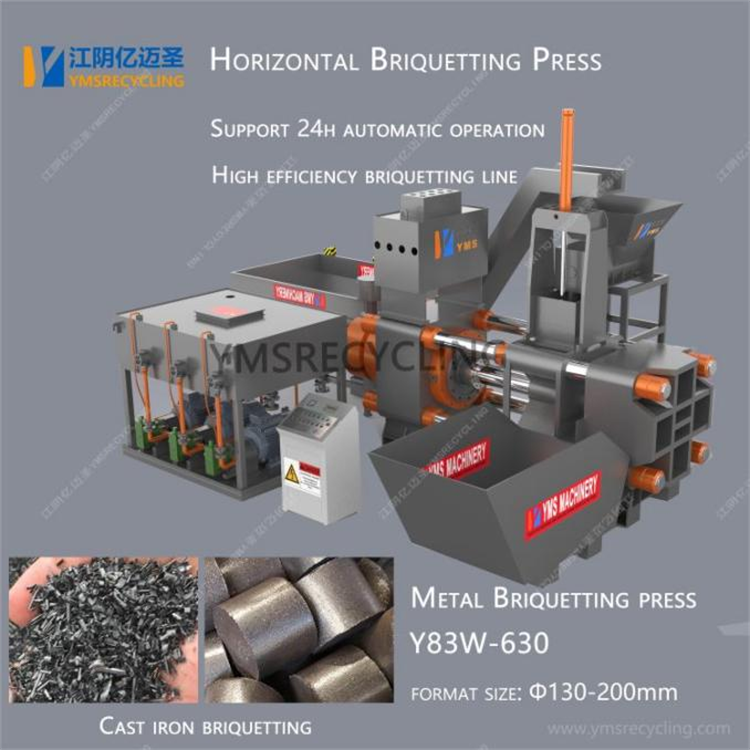
Hydraulic briquetting presses dominate metal processing, automotive machining, foundry operations, and recycling facilities. Metal scrap—including aluminum swarf, brass turnings, copper fines, cast iron borings, and steel machining chips—possesses high spring-back characteristics. When compressed hydraulically, the sustained pressure dwell forces metal particles to interlock mechanically, squeezing out expensive cutting oils and emulsions. Squeezed coolants are collected in integrated collection pans for purification and reintroduction into production CNC machines, delivering dual cost savings. Hydraulic presses are also preferred for pressing fine hazardous dusts, grinding sludges, and specialized chemical powders that require careful volume reduction without high heat generation.
4.2 Biomass, Forestry, and Solid Fuel Production
Mechanical briquetting presses are the industry standard for biomass, forestry waste, paper processing, and solid recovered fuel operations. Materials like sawdust, wood shavings, peanut shells, rice husks, bagasse, and shredder residues respond exceptionally well to the high-friction, high-speed impact of a mechanical press. The intense heat generated by high-frequency mechanical friction melts the natural lignin contained in plant materials. The melted lignin acts as a natural binder, gluing cellulose fibers together as they pass through the cooling die tube. This process produces high-density, high-calorific briquette logs that serve as clean coal alternatives in industrial boilers and power generation plants.
5. Performance and Throughput Comparison Visualized
The structural layout below illustrates the core operational differences between hydraulic and mechanical briquetting press architectures, highlighting force application, material flow, and density outputs.
6. Structural Energy Consumption and Operational Efficiency
Energy consumption forms a substantial component of total lifecycle operating costs for briquetting equipment. Comparing the energy efficiency profiles of hydraulic and mechanical units reveals distinct operational profiles suited for specific factory workflows.
6.1 Power Load Profiles of Hydraulic Power Packs
Hydraulic briquetting presses utilize variable displacement pumps and modern proportional valve controls. Power consumption correlates directly with the compression cycle load. When the feeding hopper is idle or during reloading phases, the hydraulic drive throttles back, lowering baseline electricity consumption. Furthermore, advanced hydraulic units incorporate oil coolers and smart PLC automation, optimizing energy output per ton of processed material. This makes hydraulic systems exceptionally cost-effective for medium-to-high capacity lines where material feed rates fluctuate periodically.
6.2 Kinetic Inertia Efficiency in Mechanical Drives
Mechanical briquetting presses rely on the inertia of heavy rotating flywheels to store kinetic energy. Once the flywheel reaches operational RPM, maintaining momentum requires relatively low sustained power input during continuous production. However, initiating flywheel rotation requires high initial surge current, and running the mechanical press idle consumes considerable energy. As a result, mechanical presses achieve maximum energy efficiency when operated continuously under full load capacity. In high-volume biomass plants operating 24/7 schedules, mechanical presses deliver a low specific energy consumption metric per ton produced.
7. Maintenance Requirements, Wear Parts, and Reliability
Long-term operational reliability depends heavily on preventive maintenance routines and the service life of key wear components. The high forces generated inside both equipment types demand rigorous routine maintenance schedules.
7.1 Hydraulic System Wear Characteristics
In hydraulic briquetting presses, primary wear occurs inside the compression die box, on the main pressing head, and along hydraulic seals. Because hydraulic oil acts as a protective buffer, mechanical shocks to the frame and drive components are virtually eliminated. Key maintenance tasks include monitoring hydraulic oil cleanliness, replacing fluid filters, maintaining oil temperatures via heat exchangers, and checking seal integrity. When operating parameters are kept within specified limits, hydraulic pumps and main cylinders routinely achieve service lifetimes exceeding ten years before requiring complete overhauls. Replaceable hardened wear liners inside the die chamber keep long-term maintenance costs predictable.
7.2 Mechanical Linkage and Friction Wear
Mechanical briquetting presses subject their components to constant, extreme mechanical impact and heat generation. Key wear components include the high-speed drive shaft bearings, crank linkage bushes, pressing ram heads, and tapered forming dies. The intense friction generated within the pressing die erodes steel surfaces over time, requiring frequent inspections, resurfacing, or part replacements. Automatic lubrication systems are critical for mechanical presses to prevent catastrophic bearing failure. While mechanical press parts are straightforward for on-site mechanics to replace, maintenance frequency is generally higher than that of hydraulic counterparts.
8. Operational Safety, Automation, and Modern Control Systems
Modern manufacturing demands high standards of worker safety and seamless automation integration. Digital control architectures have transformed both hydraulic and mechanical press platforms into intelligent production assets.
8.1 Hydraulic Smart Controls and Overload Relief
Hydraulic briquetting press machines natively integrate advanced Programmable Logic Controllers (PLCs) with human-machine interfaces (HMI touchscreens). Hydraulic pressure transducers monitor system forces in real time. If tramp metal, oversized foreign objects, or uncompressible debris enter the feeding hopper, the PLC instantly detects pressure spikes and automatically halts or reverses the hydraulic stroke. This automatic relief capability prevents catastrophic damage to the die, cylinder, and machine frame. Modern hydraulic presses also feature automated material dosing, real-time oil diagnostic monitoring, remote telemetry for predictive maintenance, and integrated conveyor signals for fully automated, unmanned factory operations.
8.2 Mechanical Overload Mechanisms
Mechanical briquetting presses utilize shear pins, slip clutches, and mechanical overload sensors to prevent system damage from foreign object entry. Because a mechanical crankshaft cannot stop instantaneously mid-stroke, uncompressible debris can cause jam conditions if protective safety linkages fail to disengage quickly. Modern mechanical units incorporate heavy-duty protective covers, digital vibration monitoring sensors, and emergency brake motors to enhance operator safety and prevent equipment damage during unexpected feed jams.
9. Economic Investment and Total Cost of Ownership (TCO) Analysis
Evaluating capital equipment requires analyzing both initial purchasing capital expenditure (CAPEX) and long-term operating expenditure (OPEX) over the machine's operational lifecycle.
| Economic Factor | Hydraulic Briquetting Press Machine | Mechanical Briquetting Press Machine |
|---|---|---|
| Initial Capital Investment (CAPEX) | Moderate to High (Precision hydraulics and valve blocks) | Moderate (Heavy structural steel and precision flywheels) |
| Installation and Foundations | Standard industrial floor pads; minimal isolation required | Heavy reinforced foundations required to absorb dynamic impact |
| Direct Labor Costs | Very Low; easily automated with smart sensor integration | Low to Moderate; requires regular monitoring for feed jams |
| Secondary Resource Recovery | High financial return via coolant and cutting fluid recovery | Minimal fluid return; primary value from biomass fuel sales |
| Wear Part Replacement Frequency | Low to Medium (Intervals measured in thousands of operating hours) | High (Friction dies and ram heads require frequent servicing) |
| Overall Lifecycle Longevity | Long system service life with consistent hydraulic maintenance | Robust frame design; requires periodic rebuilds of mechanical linkages |
10. Final Selection Matrix for Industrial Buyers
Choosing between a hydraulic and mechanical briquetting press machine requires matching the machine's strengths to your material stream and production requirements.
10.1 Key Selection Criteria for Hydraulic Machines
1. Your primary feedstock consists of metal turnings, aluminum chips, cast iron borings, brass swarf, or grinding sludge.
2. Recovering high-value cutting fluids, lubricants, and synthetic coolants is essential to your ROI.
3. Your production line requires precise control over briquette density, uniform shape, and pressure levels.
4. You require quiet operational noise levels and minimal floor vibration in your facility.
5. Your raw material feed rate varies throughout the day, requiring a smart machine that scales energy use automatically.
10.2 Key Selection Criteria for Mechanical Machines
1. Your feedstock consists of dry agricultural biomass, sawdust, wood chips, straw, or paper waste with less than 12% moisture.
2. Your facility requires continuous high-volume production of industrial fuel briquettes or long logs.
3. You plan to run continuous, uninterrupted multi-shift production schedules at maximum capacity.
4. You want to utilize thermal binder activation (lignin melting) without adding chemical binding agents.
By conducting a thorough material analysis, calculating expected throughput volumes, and balancing capital expenditure against long-term maintenance costs, plant operators can select the ideal briquetting press machine to maximize waste stream profitability and support sustainable manufacturing practices.
11. Frequently Asked Questions (FAQ)
Q1: What moisture content is ideal for operating a briquetting press machine?
For mechanical briquetting presses handling biomass, raw material moisture should strictly be between 8% and 12%. Higher moisture causes steam expansion inside the friction die, leading to cracked or unstable briquettes. For hydraulic presses handling metal swarf, moisture or coolant content can be higher, as fluid is safely squeezed out and collected during compression.
Q2: Are binding chemicals required to form dense briquettes?
In most industrial applications, binders are not required. Hydraulic presses use intense hydrostatic pressure to interlock metal particles mechanically. Mechanical presses use friction heat to melt natural plant lignins, which act as a natural glue for biomass materials. Binders are only necessary when processing non-binding materials like fine graphite or special mineral powders.
Q3: How much volume reduction can be expected from a briquetting press?
Depending on the initial loose density of the raw material, a high-performance briquetting press machine typically achieves volume reductions ranging from 8:1 up to 20:1. Loose metal turnings or fluffy sawdust show the highest density conversion rates.
Q4: How do briquetting press machines help scrap metal recyclers increase profits?
Compressed metal pucks are highly valued by foundries compared to loose swarf. Loose swarf suffers from high burn-off oxidation losses during melting. Dense hydraulic briquettes sink below the slag line in induction furnaces, increasing metal yield while recovering expensive cutting coolants for re-use.
Q5: What is the typical service life of main wear components?
In hydraulic systems, die liners and pressing pins typically last between 2,000 and 4,000 operating hours depending on material abrasiveness. In mechanical systems processing abrasive wood or agricultural dust, ram heads and die tubes may require maintenance or resurfacing every 500 to 1,500 hours.
12. Industry References and Technical Standards
1. ISO 21950: Industrial Waste Management and Resource Recovery Equipment Guidelines.
2. ASM International Handbook: Volume 7 - Powder Metallurgy Technologies and Pressing Mechanics.
3. European Committee for Standardization (CEN): EN 14214 - Solid Biofuels and Densified Fuel Specifications.
4. Fluid Power Educational Foundation: Hydraulic Cylinder System Design and Pressure Control Engineering Manual.
5. Biomass Energy Technology Board: Industrial Mechanical Briquetting and Mechanical Densification Standards.