 English
 русский
 Español

If your machining shop or recycling center has ever watched a mountain of aluminum chips grow over a couple of weeks, you know the problem too well: loose turnings are light, messy, and hard to load. A metal briquetting machine solves that by compressing loose chips into dense, uniform briquettes that take up a fraction of the original volume. In fact, briquetting is one of the most direct ways to improve material handling and increase the value of metal scrap before it leaves your yard.
Content
What Is a Metal Briquetting Machine?
A metal briquetting machine uses hydraulic pressure to compact loose metal chips, shavings, borings, and small fragments into regular-shaped briquettes. The feed material is loaded into a die, compressed by a hydraulic cylinder, and then ejected as a solid block. Typical briquette shapes are round, square, or hexagonal, with densities close to solid metal.
The machine’s real work happens in two stages: initial compressing to remove air and liquid, and a final high-pressure stroke that locks the chips together. Many units also have a pre-dosing hopper or conveyor feed system to keep cycle times predictable.
Common materials processed
- Aluminum chips and shavings
- Copper chips and turnings
- Brass borings
- Iron and cast-iron chips
- Steel turnings and shredded steel
- Crushed metal fragments from milling and stamping
Why Briquette Metal Chips at All?
The first reason is economics. Loose chips contain water, coolant, or cutting oil that lowers the value you get from a scrap buyer. Briquetting squeezes out most of that liquid, producing a dry, denser product that commands a better price. The second reason is logistics. A pile of aluminum shavings may be 80 percent air; a briquette pack reduces its volume by roughly three to five times, so you save on trucking, storage, and staging space.
- Higher scrap value: dry, dense briquettes are easier to grade and trade.
- Fewer loads: less volume means fewer containers and lower freight costs.
- Better melting: briquettes can be charged directly into a furnace, reduce oxidation losses and dross formation.
- Cleaner floor: no trailing oil from stored chips, safer work environment.
- Simpler environmental compliance: less waste liquid handling and lower containment costs.
There is also a market-facing benefit. Many foundries and scrap processors now expect chip-heavy customers to deliver briquetted material, especially when the value of the metal is high. By installing a briquetting press, you move from selling a contaminated, bulky by-product to supplying a clean, feedstock-like material that fits directly into their process.
Vertical or Horizontal Metal Briquetting Machine?
Two hydraulic machine layouts dominate the market: vertical presses and horizontal presses. Your choice depends on space, material handling, cycle time, and the density you need for the specific chip type. The basic trade-off is between compaction force, footprint, and feeding method. For a more detailed comparison of the operating principles, see our article on the differences between vertical and horizontal metal briquetting machines.
| Consideration | Vertical press | Horizontal press |
|---|---|---|
| Compression direction | Top to bottom | Side to side |
| Footprint | Taller, narrower | Longer, lower |
| Typical briquette density | Higher | Good |
| Throughput | Higher per cycle | Steady continuous output |
| Feeding | Often manual or skip hoist | Conveyor-friendly |
| Common use | Chips, turnings, coarse borings | High volume, low-headroom plants |
Vertical briquetting presses
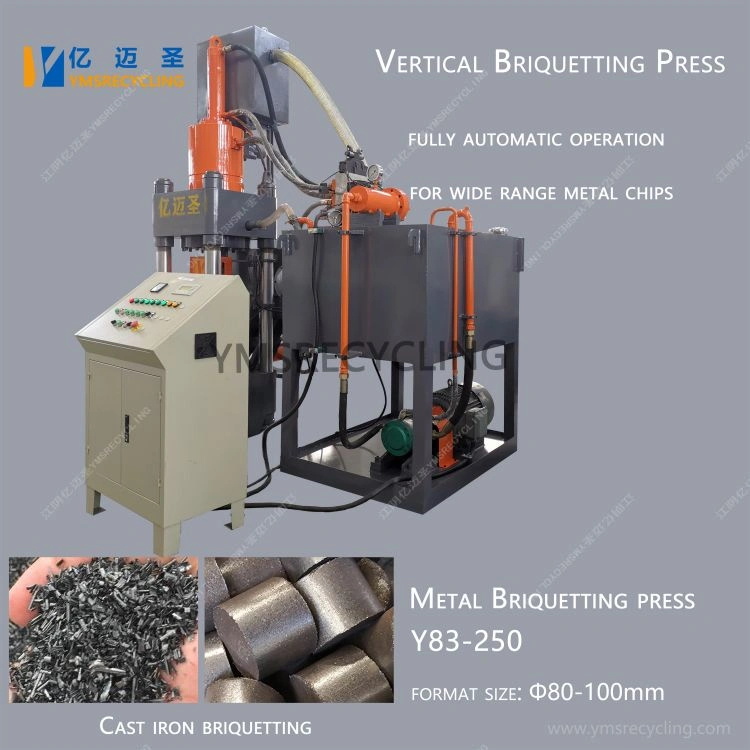
Vertical machines offer a large filling chamber and powerful down-stroke compression. They are usually capable of producing the highest density briquettes, which is valuable for materials like cast iron borings and mixed steel chips. The drawback is ceiling height and the need to load material near the top. If consistent block quality is your priority, a vertical press from the Y83 series is worth serious attention.
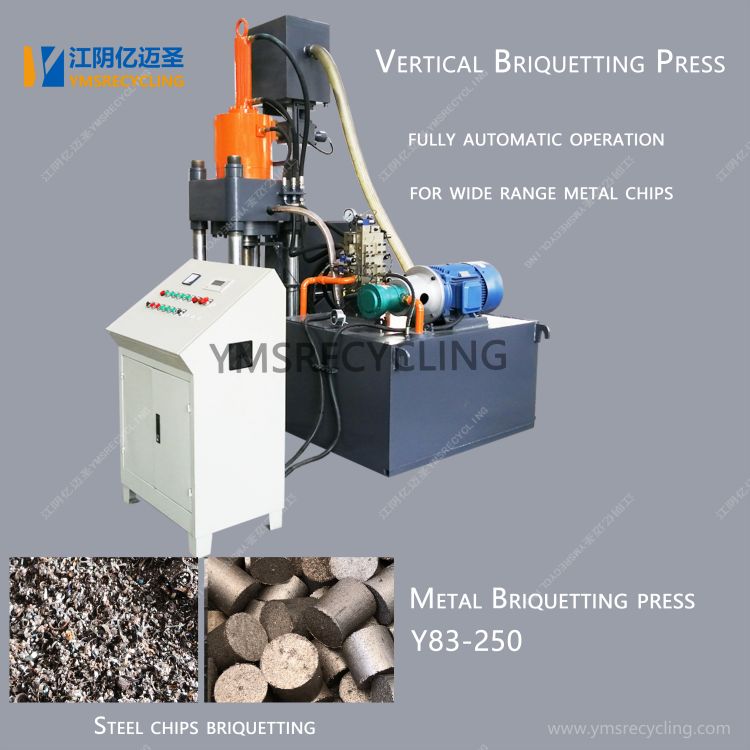 Y83 Vertical Hydraulic Briquette Press for Steel, Copper, Aluminum, and Iron ChipsThis vertical press suits facilities with limited floor space and delivers dense cylindrical briquettes from 25mm to 240mm. Manual and PLC control options make it adaptable for consistent block quality in high-demand metal chip recycling.View Product →
Horizontal briquetting presses
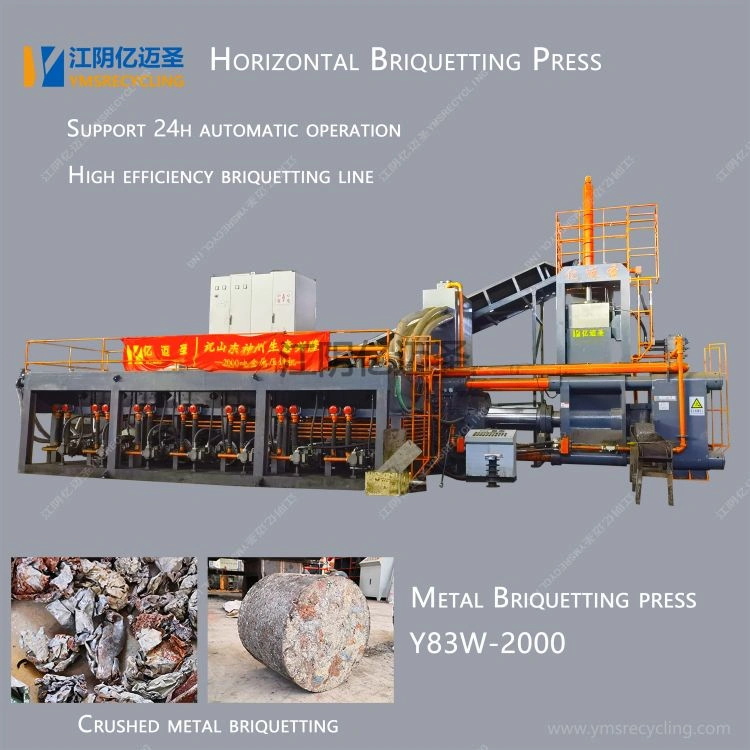
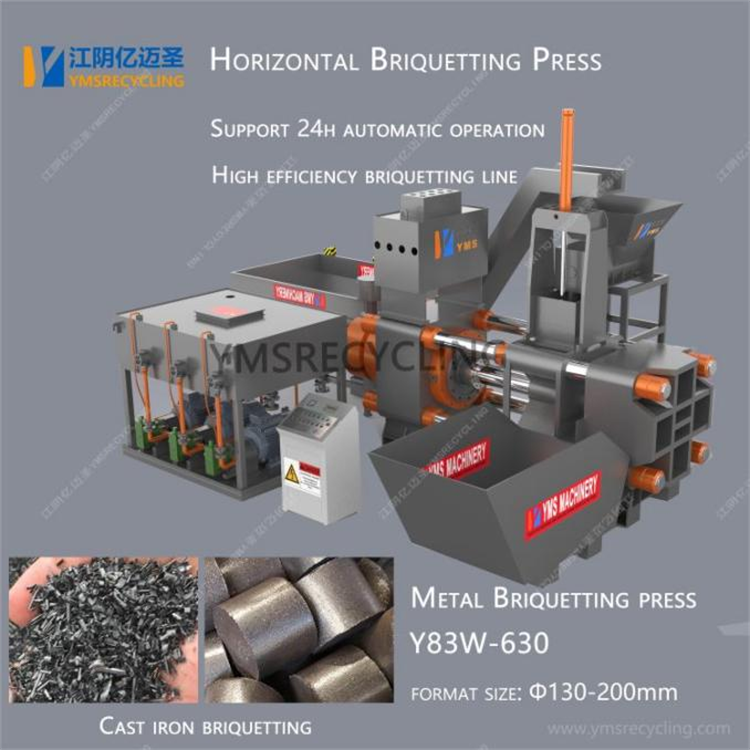
Horizontal presses use a pre-chamber and a side-acting plunger. They are easier to install in low buildings, and their open design makes conveyor feeding simple. Horizontal units are often chosen for aluminum and copper chips, where throughput and continuous operation matter more than maximum density. The Y83W series is built for that kind of workhorse duty.
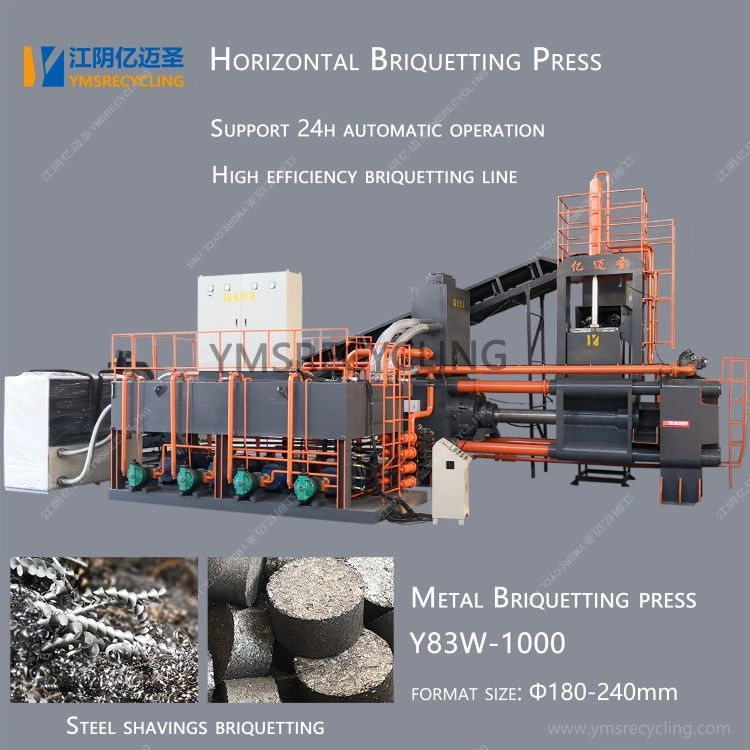 Y83W Horizontal Hydraulic Briquette Machine for Mixed Metal Chips and TurningsDesigned for throughput-oriented operations, this horizontal press handles steel, aluminum, and copper chips under 10cm. PLC automation reduces manual effort, while conveyor feeding fits low buildings and continuous production lines.View Product →
Match the Machine to Your Scrap Stream
Different metals behave differently under compression, so your most common scrap chemistry should guide the machine choice. Aluminum turnings are light and oily; a briquetting press with a pre-drain system handles them best. Copper and brass chips are heavy and can jam if the feed is too coarse; a robust vertical machine with a reinforced mold keeps cycle times stable. For steel and iron, you need higher tonnage to weld the materials into a compact block.
Aluminum chips and turnings
Aluminum chips are light and tend to float in a container. They also hold cutting fluid, adding weight without value. A dedicated aluminum chip briquetting unit produces compact briquettes that can be stacked on a pallet and easily charged into a furnace. The fluid that drains from the material can be filtered and reused, reducing consumable costs and discharge issues.
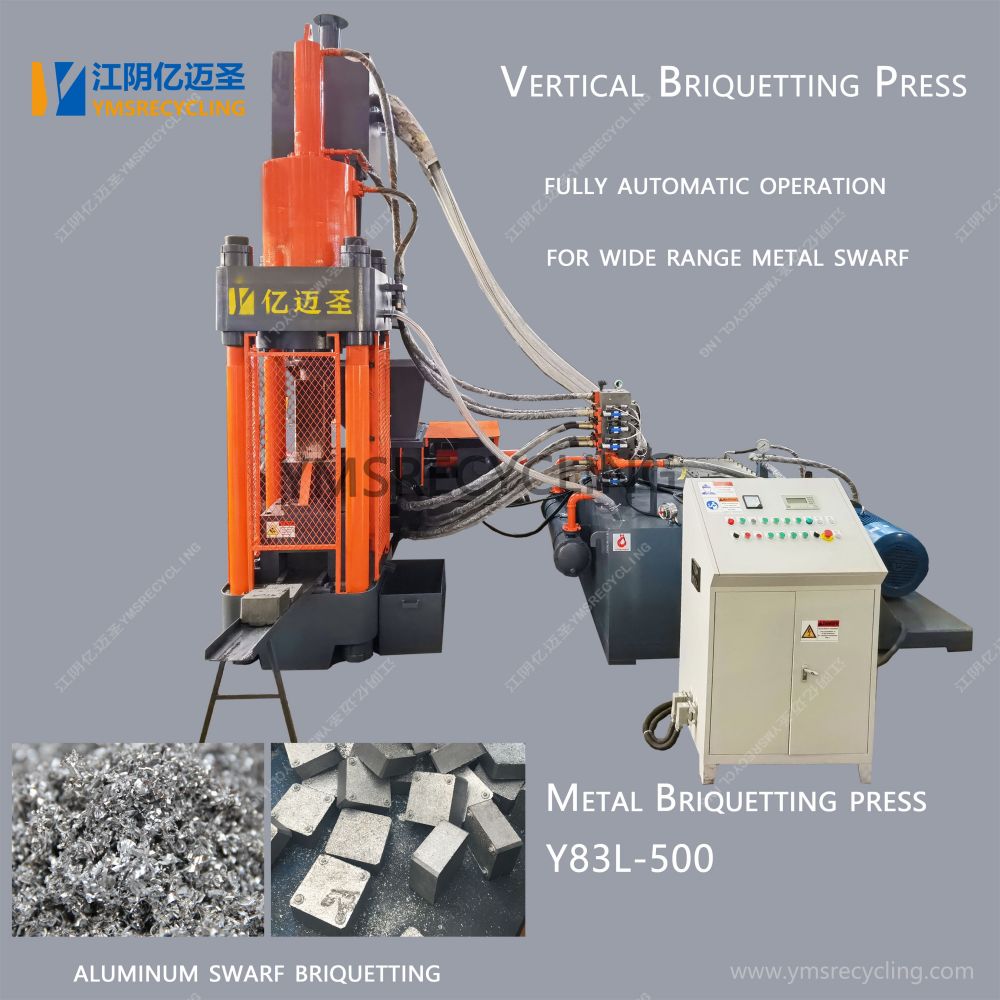 Fully Automatic Vertical Aluminum Chip Briquetting Machine with Fluid RecoveryThis unit transforms light, oily aluminum turnings into compact briquettes that stack and melt efficiently. Its automatic operation helps recover cutting fluid, lowering consumable costs while improving furnace charge value.View Product →
Copper and brass chips
Copper chips are heavy and abrasive. A hard-faced mold and a slow initial press stroke reduce wear on the tooling. Copper briquettes are highly prized by foundries because they charge evenly and melt without excessive loss. Brass turnings behave similarly, though they may require a slightly different feed angle to prevent bridging in the hopper.
Steel and iron borings
Steel turnings are stringy and may need pre-shredding before briquetting. Once compressed, the briquettes have enough strength to be stored outdoors without crumbling. Iron borings from drilling and milling operations are normally dry enough to compress directly, making them some of the easiest materials to process. A vertical machine with a large fill chamber is often the best fit here.
Key Buying Considerations for a Briquetting Press
Because a briquetting press is a long-term investment, you should evaluate more than the purchase price. The following checklist is a practical starting point based on operating experience:
- Moisture and oil content. Dry chips yield higher densities and better furnace performance. Ask whether the press has a drainage channel or fluid recovery tray.
- Chip size and shape. Long stringy turnings may need pre-crushing before briquetting.
- Target density and briquette size. This affects furnace charging and the price your buyer pays.
- Cycle time. Compare cycles per hour, not just press force, because total output is what pays for the machine.
- Energy efficiency. Look for low motor power at high working pressure, using accumulator systems that store hydraulic energy.
- Tooling wear. Wear parts such as molds and plungers should be easy to replace and reasonably priced.
- Safety and certification. Check that the design meets electrical and safety standards in your country, and that the machine is fully tested before delivery.
Maintenance matters just as much. Hydraulic oil viscosity, filter changes, and clearance between plunger and mold all influence briquette quality. A manufacturer that can supply spare parts and commissioning support shortens downtime in the first year.
In short, a metal briquetting machine pays back by turning messy, low-grade chips into clean, compact scrap. Your choice comes down to space, material type, and throughput. Compare vertical and horizontal designs carefully, then talk to a manufacturer that can test your material and recommend a specific model. For a concrete quote, reach out to the YMSRECYCLING engineering team with your scrap profile.