 English
 русский
 Español

Machine a batch of 7075 aluminum wing ribs or a run of titanium fittings, and you will fill bins with tangled chips soaked in coolant. Left loose, that swarf is priced as low-grade scrap, eats floor space, drips oil across the shop, and, in the case of titanium fines, introduces a genuine fire hazard. An aerospace metal waste briquetter fixes the problem at the source: it compresses loose chips into dense, solid pucks that dealers and smelters pay more for, squeezes out cutting fluid you can reuse, and cuts storage and transport volume by up to 90 percent. For aerospace manufacturers, where every kilogram of alloy was expensive to buy in the first place, briquetting turns a disposal line item back into a recoverable asset.
Content
Why Aerospace Scrap Earns More as a Briquette
Loose machining chips are the least valuable form of metal scrap. They are oxidized on every surface, laced with coolant, and difficult to weigh or load accurately, so dealers price them well below clean solid alloy and may decline small lots altogether. Pressing the same material into briquettes changes the economics in four concrete ways:
- Higher resale value. A dense briquette approaches the density of solid metal, so it can be weighed, sampled, and sold like prime scrap instead of discounted turnings.
- Better remelt yield. Briquettes sink into a melt bath and melt with less surface oxidation than loose chips, so more of the alloy you already paid for returns as usable ingot.
- Coolant recovery. Hydraulic compression expels much of the cutting fluid trapped between chips; the fluid collects in a tank and can be filtered and reused, reducing both new-fluid purchases and disposal charges.
- Safer handling. Oily chips create slip hazards around machines, and fine titanium particles are reactive enough to fall under combustible-metal fire standards such as NFPA 484. Compacted pucks sharply reduce both risks.
Aerospace shops already segregate alloys at the machine, so keep that discipline through the pressing stage: run one alloy per briquetting campaign, label the output, and a 7075 lot stays 7075 instead of being downgraded to mixed-remelt pricing.
How a Hydraulic Briquetter Turns Chips Into Pucks
The process is mechanically simple, which is why it holds up in production. Chips are fed into a compression chamber from a hopper, either by hand or through an infeed conveyor. A hydraulic ram then drives the material into a die under high pressure. At that pressure the chip surfaces cold-weld to one another - no binder or additive is needed - and the loose mass becomes a solid puck. Expelled coolant drains through ports in the chamber into a collection tank, and the finished briquette is ejected automatically into a bin or onto a discharge conveyor.
Two material variables decide the result. Particle size matters: short, broken milling chips compress differently from long, stringy lathe turnings, and very fine sawing swarf may need to be blended with coarser chips. Moisture matters just as much, because overly wet chips can trap fluid inside the briquette and pull its density down. Shops that run very wet swarf often place a centrifuge or draining step ahead of the press. Both variables are easy to check in advance - send a sample of your actual chips to the equipment supplier and ask for a trial pressing before you commit to a machine.
Which Aerospace Waste Streams Belong in a Briquetter
Aluminum is the obvious candidate. Alloys such as 2024, 6061, and 7075 dominate airframe machining, and a dedicated aluminum-chip machine - vertical or horizontal - is built around exactly this stream, from the die size to the fluid drainage rate.
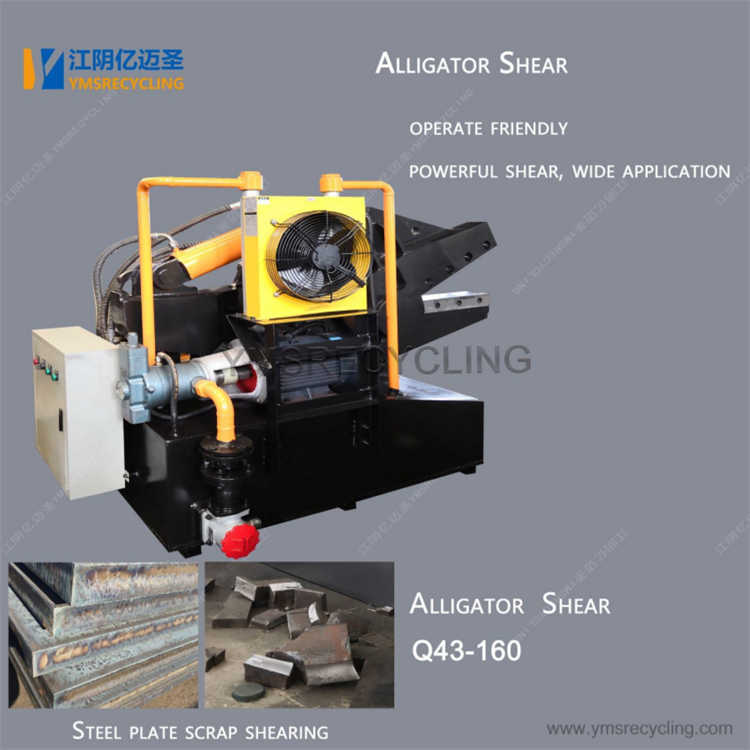
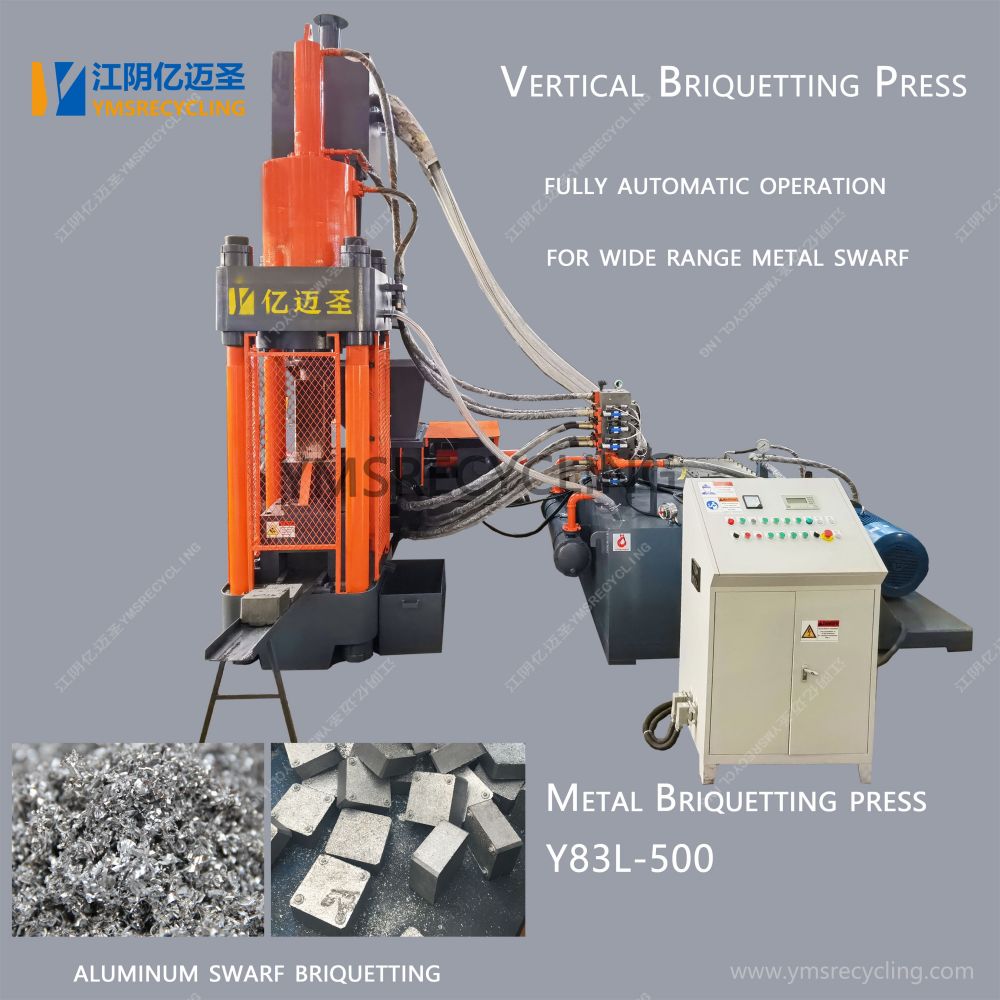 Vertical Aluminum Chips Briquetting MachineAerospace machining generates large volumes of 2024, 6061, and 7075 aluminum chips. This vertical briquetting press compacts them into dense briquettes, recovering cutting fluid while cutting storage and transport costs.View Product →
Steel comes next in volume. Landing gear components, engine mounts, and fastener production generate chips from high-strength alloy steels, while stainless appears around exhaust and hydraulic-line work. Copper and brass turn up in smaller quantities from electrical connectors, bushings, and instrumentation fittings, and matching copper and brass chip models exist for those streams.
Titanium and nickel-based superalloys deserve a separate note. These alloys are briquetted across the aerospace industry, and the fire-risk argument for compacting them is the strongest of any metal. Their pressing behavior, however, differs from aluminum and steel, so treat them as an engineering question rather than a catalog entry: confirm press force, die tooling, and cycle settings with the manufacturer using your actual swarf before assuming a standard specification covers them.
Whatever the alloy, keep the streams separated before pressing. A briquette made of mixed alloys can only be sold as mixed scrap, which erases most of the value the machine just created.
Vertical or Horizontal Frame: Matching the Machine to Your Volume
Briquetters come in two structural formats, and the choice is mostly about volume and workflow rather than output quality.
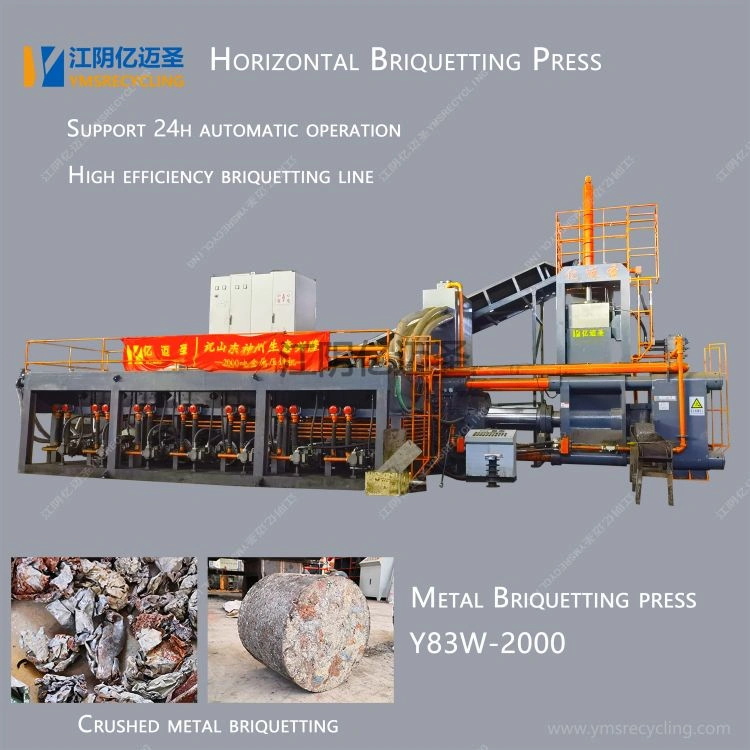
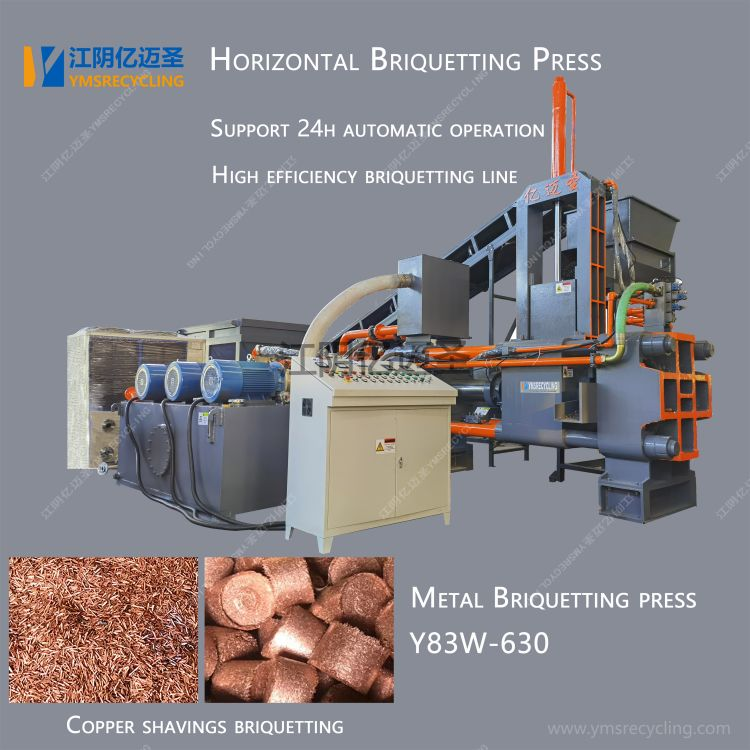
Vertical presses, such as the Y83 series, drive the ram downward into the die. They occupy a compact footprint, feed easily from a hopper, and suit machining cells that produce chips in batches. Horizontal presses, such as the Y83W series, compress along a horizontal axis and accept continuous conveyor feeding, which makes them the natural choice for a central chip-processing area serving an entire shop - including crushed metal chips coming off a shredding line.
| Feature | Vertical press (Y83 series) | Horizontal press (Y83W series) |
|---|---|---|
| Ram orientation | Presses downward into the die | Presses along a horizontal axis |
| Floor space | Compact; fits beside machining cells | Larger; usually placed in a central chip area |
| Feeding method | Batch loading via hopper or hand | Continuous conveyor or screw feeding |
| Typical workload | Moderate volumes and mixed batch work | Higher hourly throughput, steady production |
| Material range | Aluminum, brass, copper, iron, and steel chips | Same metals, plus crushed metal chips from shredding lines |
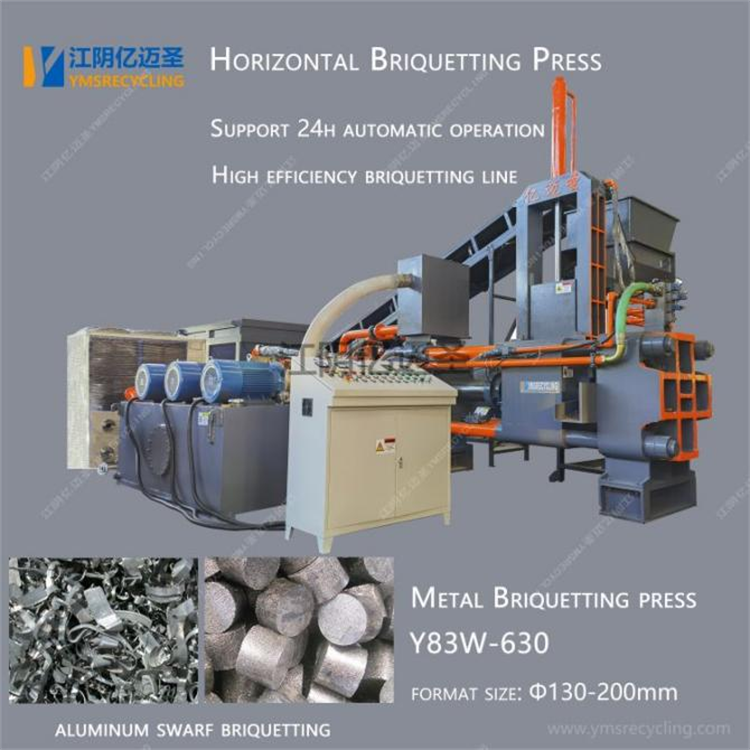 Horizontal Aluminum Chips Briquetting MachineFor central chip-processing areas serving an entire shop, horizontal presses accept continuous conveyor feeding and deliver higher hourly throughput than vertical units, making them suited to high-volume aluminum chip streams.View Product →
The trade-off is straightforward: a vertical machine minimizes floor space and entry cost, while a horizontal machine maximizes hourly throughput. If your operation sits near the line between the two, this comparison of vertical and horizontal metal briquetting presses walks through the decision in more detail.
A Procurement Checklist for Aerospace Buyers
Work through the following points in order - they are sequenced by how often each one causes trouble when skipped:
- Throughput match. Weigh the chips your shop generates per shift and size the machine for that rate with roughly 20 to 30 percent headroom.
- Briquette specification. Agree with your scrap buyer on a target puck diameter and density, then ask the supplier to prove both with a sample pressing of your chips.
- Chip condition. Record oil content, moisture, and chip length. Stringy turnings, wet swarf, and fine dust each call for different infeed arrangements, and some shops need a crusher or centrifuge upstream.
- Material mix. If you machine both aluminum and alloy steel, decide whether you need one machine per alloy family or a strict pressing schedule; mixed-alloy output loses value immediately.
- Automation level. Confirm what ships with the base machine - hopper, infeed conveyor, discharge belt, fluid recovery tank - and what is quoted separately.
- Verification and testing. Run a trial with your own swarf, and confirm the machines are built under a documented quality system and tested before shipment.
- After-sales reality. Hydraulic seals and pumps wear, so ask which spares ship with the machine and how quickly service parts can reach your site.
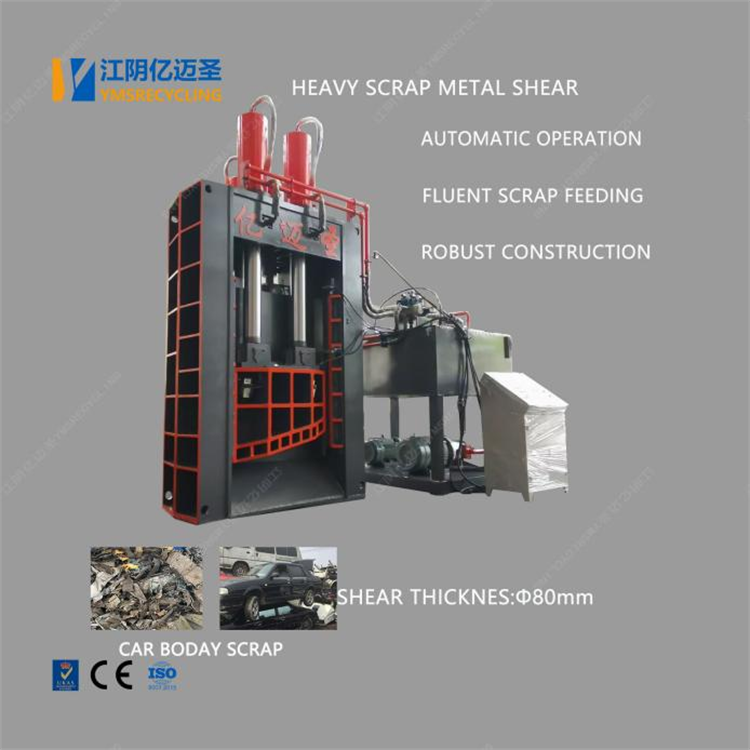
The two classic procurement failures sit at opposite ends of the sizing scale. An undersized press produces crumbly briquettes that a dealer will discount again, which puts you back where you started with a capital expense added. An oversized press ties up capital and floor space pressing chips you do not actually generate. For shops cutting high-strength steels in real volume, a dedicated steel-chip pressing configuration usually proves the more durable choice.
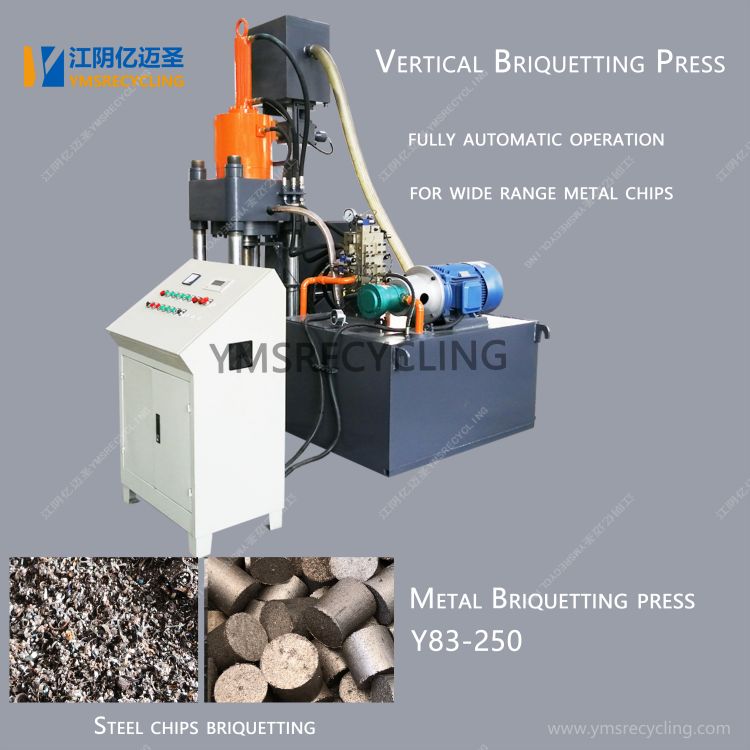 Vertical Steel Chips Briquetting MachineShops cutting high-strength alloy steels for landing gear, engine mounts, and fasteners need a pressing configuration built for steel chips. A dedicated steel briquetter helps avoid undersized or oversized press purchases.View Product →
A briquetter does not create value out of nothing; it stops alloy value from leaking away through discount pricing, lost coolant, and rented scrap bins. The fastest way to de-risk a purchase is to start with your own material: bag a sample of chips from each alloy you machine and request a pressing test with a density report. If you want a second opinion on chip profile, press sizing, or plant layout, the team at Jiangyin Yimaisheng Hydraulic Machinery can review your stream and recommend a configuration - just reach out through the contact page.