 English
 русский
 Español

A machining shop running three shifts can generate several tons of metal turnings in a week. Those chips pile up in bins, spill onto the floor, and take up space that could be used for production. When the scrap dealer arrives, loose chips sell at a discount because they are difficult to load, transport, and melt. That is the exact problem a metal briquetting machine is designed to solve.
A metal briquetting machine compresses loose metal chips, shavings, and turnings into solid, dense briquettes under high hydraulic pressure. The result is an 80–90% reduction in volume, cleaner handling, lower freight costs, and a significantly better scrap price. This article explains what the machine does, how it works, which types exist, and what you should think about before buying one.
Content
What Is a Metal Briquetting Machine?
A metal briquetting machine is a hydraulic press that densifies loose and porous metal waste into compact briquettes. Typical feedstocks include aluminum chips, copper shavings, brass turnings, steel swarf, and crushed metal fines. The briquettes come out as solid cylinders or rectangular blocks that are easy to stack, store, and charge into a furnace.
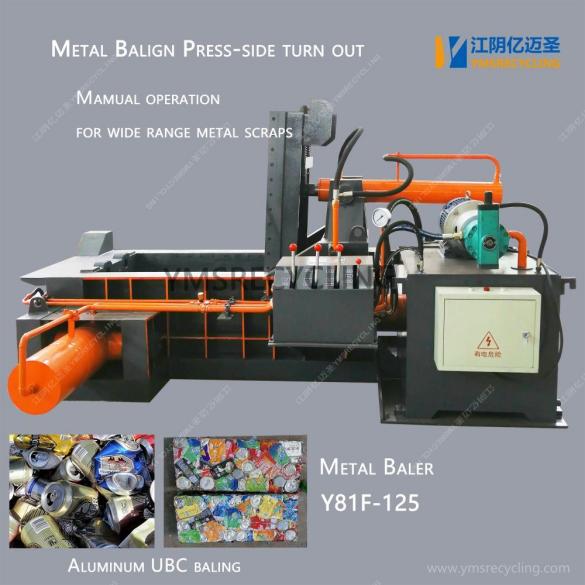
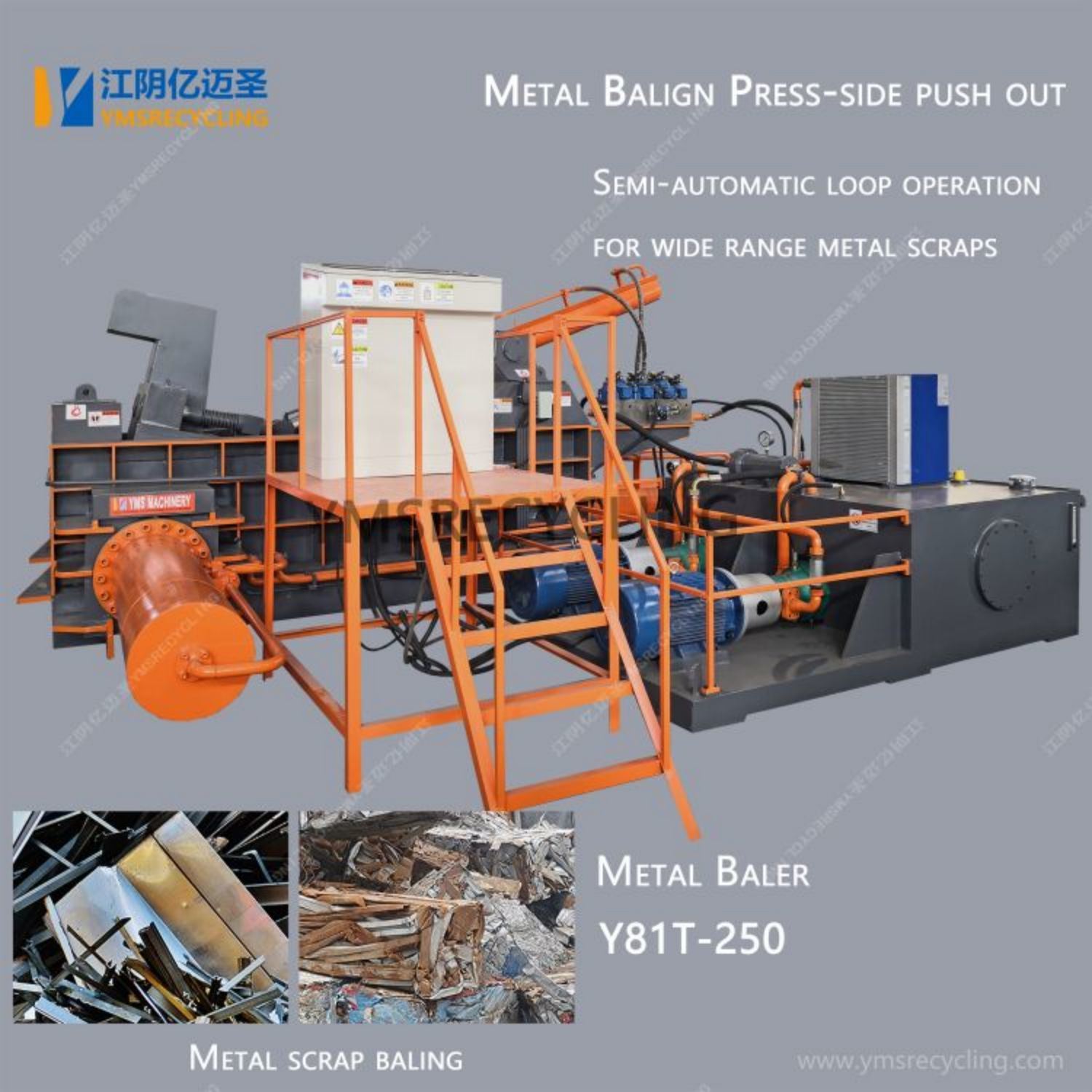
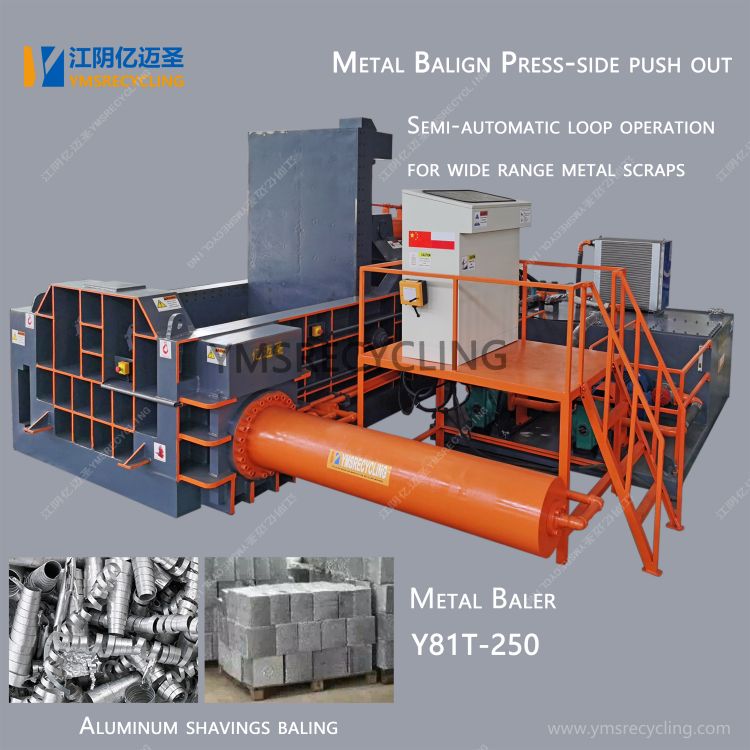
Briquetting machines are often mentioned together with scrap metal balers, but the two handle different material ranges. A baler compresses large light forms such as cans, sheets, and appliance bodies into dense bales. A briquetting machine is used for small irregular particles and swarf that cannot be baled effectively. The distinction matters because it determines which machine belongs in which production line.
The density gain is what makes the process attractive. Loose aluminum shavings have a bulk density of roughly 0.1 to 0.3 t/m³. Compressed into briquettes, the same material typically reaches 1.5 to 2.2 t/m³. That is not just a storage improvement. It changes the economics of handling, freight, and melting losses. Different metals reach different densities under the same press: aluminum turnings compress to about 1.5–1.8 t/m³, copper chips to 4.5–5.5 t/m³, and steel swarf to 3.5–4.5 t/m³. These numbers matter when you calculate transport savings and melting yield.
How Does a Metal Briquetting Machine Work?
All metal briquetting machines rely on hydraulic force. A hydraulic cylinder drives a ram into a closed compression chamber filled with metal chips. As the ram advances, the air between the particles is expelled and the metal is forced into close contact. For ductile metals such as aluminum and copper, the pressure creates cold welds at the particle boundaries. That is what holds the briquette together without any binder or heating.
Because cold welding is a mechanical bond formed between clean metal surfaces, the chips must be free of heavy contamination. Light cutting oil films are acceptable and are often pressed out of the briquette during compression, collecting in a drip tray.
A standard working cycle consists of four steps:
- Loading: chips are fed into the compression chamber from a hopper, conveyor, or manual chute.
- Compression: the main ram moves forward and compresses the material to the target density.
- Holding: the ram keeps pressure for a brief dwell time so the briquette stabilizes.
- Ejection: the finished briquette is pushed out of the mold and drops onto a tray or conveyor.
In production machines the cycle is automated. Cycle time depends on pump flow rate, cylinder size, material type, and required briquette density. A full step-by-step walkthrough of the mechanics is available in this explanation of how a scrap metal chips briquetting machine works.
Vertical vs. Horizontal Briquetting Machines
Briquetting machines come in two main layouts. The vertical configuration compresses the material with a downward-moving ram, while the horizontal configuration uses a sideways ram. Both produce good briquettes, but the choice affects floor space, output, automation level, and maintenance access.
| Characteristic | Vertical | Horizontal |
|---|---|---|
| Compression direction | Vertical, downward ram | Horizontal, side ram |
| Floor footprint | Compact, fits into small bays | Longer, needs more clearance |
| Typical output range | Low to medium | Medium to high |
| Feeding method | Manual or semi-automatic | Conveyor or hopper, full automation possible |
| Best suited for | Job shops, tool rooms, smaller volumes | Large machining plants, scrap processors |
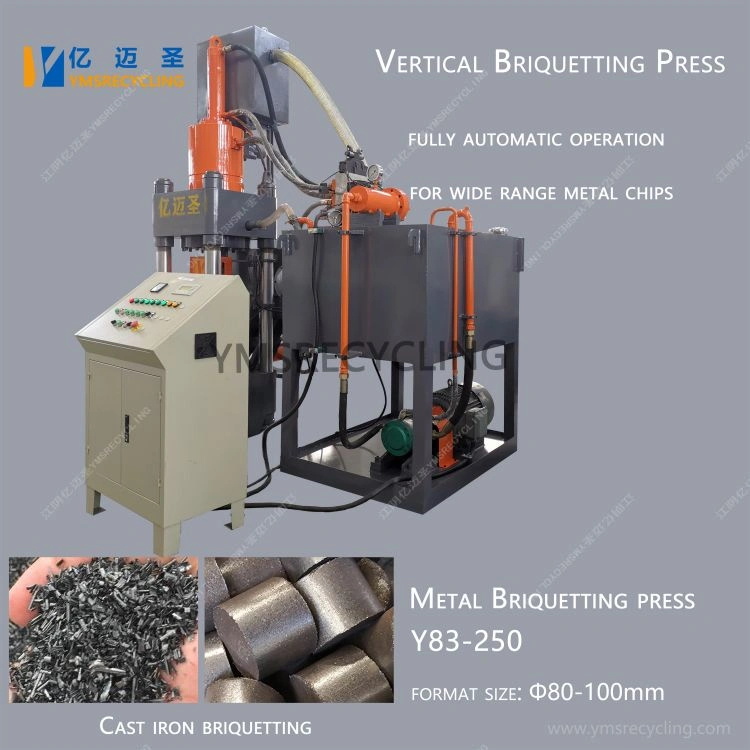
For a workshop with limited floor space and a moderate volume of aluminum or copper turnings, a vertical press such as the Y83 vertical metal briquetting machine is a practical starting point. It needs less space, has a simpler frame, and is easier to operate in a normal workshop environment.
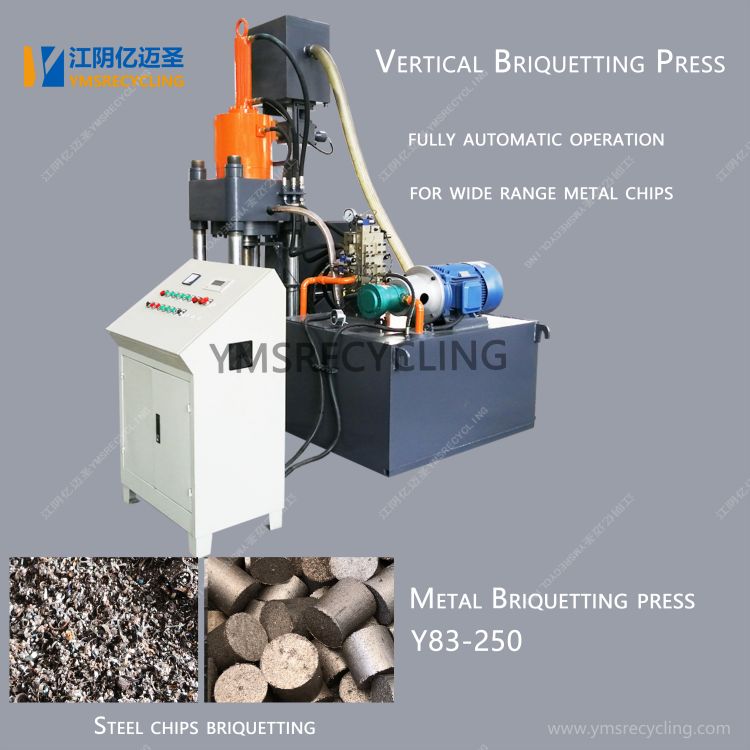 Custom Y83 Vertical Hydraulic Metal Briquetting Machine Manufacturers, SuppliersJiangyin Yimaisheng Hydraulic Machinery Co., Ltd is China Y83 Vertical Hydraulic Metal Briquetting Machine Manufacturers and Y83 Vertical...View Product →
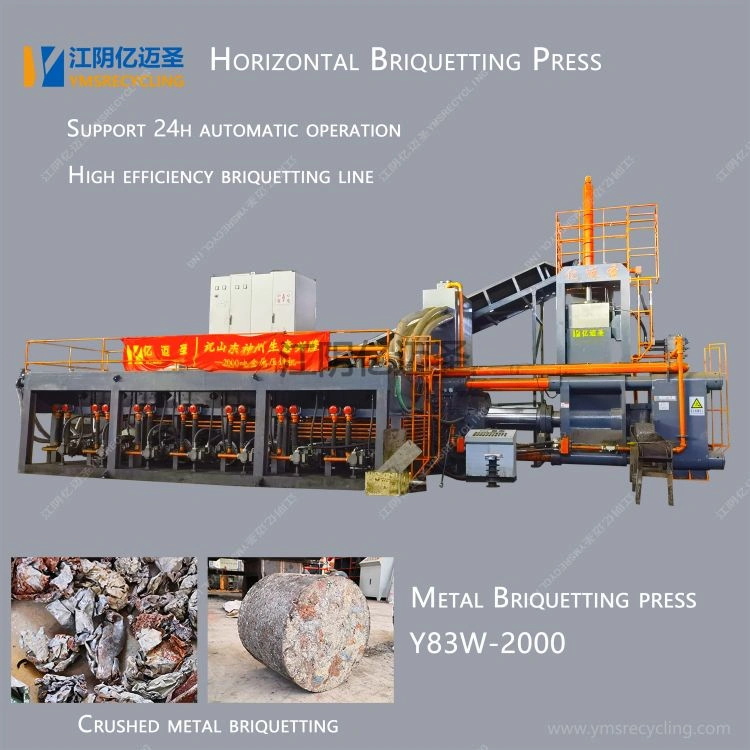
For plants that run longer shifts and want continuous operation, the Y83W horizontal metal briquetting machine is usually a better fit. The horizontal layout accepts automated feeding, supports higher cycle rates, and delivers consistent briquette quality over long runs.
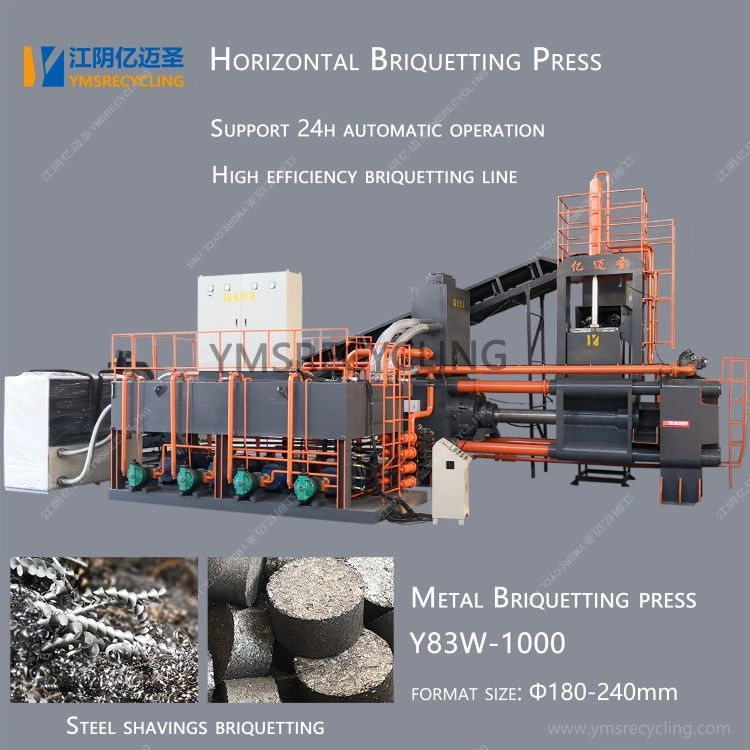 Custom Y83W Horizontal Hydraulic Metal Briquetting Machine Manufacturers, SuppliJiangyin Yimaisheng Hydraulic Machinery Co., Ltd is China Y83W Horizontal Hydraulic Metal Briquetting Machine Manufacturers and Y83W Hori...View Product →
What Materials Can Be Briquetted?
Briquetting works with any ductile metal that responds well to pressure. The most common feedstocks in recycling and machining operations are:
- Aluminum chips and shavings from CNC milling and turning.
- Copper and brass turnings from electrical, plumbing, and busbar manufacturing.
- Iron and steel chips from drilling, milling, and grinding operations.
- Crushed metal fines from shredding and sorting lines.
Each material behaves differently under pressure. Aluminum compresses easily and forms stable high-density briquettes that are almost ideal for remelting. Copper is heavier and produces briquettes with very high density, which makes them especially attractive in smelting. Steel chips require more hydraulic force, so they usually call for a heavier machine, but the payoff is also fast because steel swarf is one of the most difficult materials to handle when loose.
The economic case is covered in more detail in this article on why you need a scrap metal chips briquetting machine. In short, briquetted material sells at a better price, takes up less truck space, and suffers less oxidation during melting.
Key Factors When Choosing a Briquetting Machine
Several operating conditions determine which machine will perform well in your specific setup. These are worth checking before you start comparing prices.
Material condition and liquid content
Clean dry chips produce the densest briquettes. If your chips contain cutting fluid or coolant, the machine needs a drainage system that separates the liquid from the briquette. Some horizontal models integrate a pre-drainage section that removes excess fluid before compression. The moisture and oil content of the feedstock also affects the achievable briquette density, so it should be measured before selecting a machine size.
Production volume and automation
Estimate the weekly volume of chips you need to process. A job shop generating a few tons per week can run a vertical machine with semi-automatic feeding. A plant processing ten or more tons per day should look at a horizontal machine with hopper or conveyor feeding. The difference is not only in cycle speed but also in operator workload and overall labor cost.
Space, mold, and maintenance
Floor space, ceiling height, and access for maintenance all influence the final selection. Vertical machines are easier to service because the hydraulic cylinder is mounted in an open frame. Horizontal machines are larger but allow easier integration with existing chip conveyors. The mold shape determines whether you produce solid round briquettes, rectangular blocks, or hollow-center pellets, so check which form your scrap buyer prefers. For a closer look at how the two layouts differ in practice, this comparison of vertical and horizontal metal briquetting machines is worth reading.
Conclusion
A metal briquetting machine turns a messy waste stream into a clean, saleable product. It reduces volume by roughly 80–90%, improves scrap value, lowers freight costs, and keeps the workshop safer and more organized. The main decision points are simple: vertical for compact spaces and moderate volumes, horizontal for continuous production and higher throughput. Choose the configuration that matches your material type, floor space, and target daily output, and the machine will pay for itself through better scrap margins and lower handling costs.