 English
 русский
 Español

When a scrap metal recycling operation needs to compress loose metal scrap into dense, stackable bales for transport and resale, the two main equipment options are a vertical metal baler and a horizontal metal baler. Both machines use hydraulic pressing force to compress scrap into a bale, and both produce output that is denser and easier to handle than loose scrap. But the two configurations differ significantly in how they are loaded, how they operate, what throughput they can sustain, and which types of scrap material and operation sizes they are best suited for.
Choosing the wrong configuration — a vertical baler in an application that needs a horizontal machine's throughput, or a horizontal baler where a vertical unit would have been sufficient — results in either a capacity bottleneck that limits the operation's processing rate, or an oversized capital investment that the operation's volume cannot justify. This guide explains the practical differences and helps you identify which configuration makes sense for your specific situation.
Content
- 1 How Does a Vertical Metal Baler Work?
- 2 How Does a Horizontal Metal Baler Work?
- 3 Side-by-Side Comparison: Vertical vs Horizontal Metal Baler
- 4 When Does a Vertical Baler Make More Sense?
- 5 When Does a Horizontal Baler Make More Sense?
- 6 The Y82 and Y81: YMS Recycling's Vertical and Horizontal Baler Range
- 7 Frequently Asked Questions
- 8 Metal Baling Press Machines from YMS Recycling
How Does a Vertical Metal Baler Work?
In a vertical metal baler, scrap material is loaded into a vertical chamber from the top or side. A hydraulic ram mounted at the top of the chamber presses downward, compressing the loose scrap against the floor of the chamber. When the compression stroke is complete and the required density has been achieved, the chamber door is opened, and the finished bale is ejected or removed from the front or side of the machine.
The vertical configuration means the pressing force acts downward — in the same direction as gravity — which simplifies the chamber design and allows a relatively compact machine footprint. The operator can load material into the open top chamber using a shovel, forklift, or conveyor, compress it, then remove the bale before loading the next charge. Vertical balers are inherently batch-process machines: load, press, eject, reload.
Vertical metal balers are available in a wide range of pressing force ratings, from small units producing bales of a few hundred kilograms suitable for workshops and small scrap dealers, to large-capacity units pressing forces of 500 tonnes or more for industrial recycling facilities handling high volumes of heavy ferrous scrap.
How Does a Horizontal Metal Baler Work?
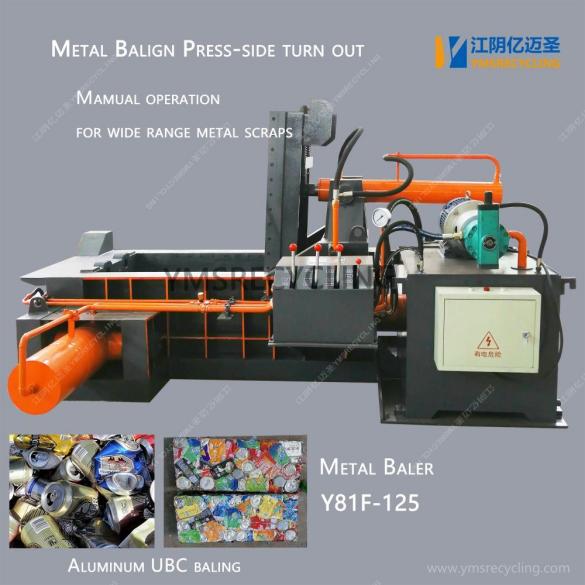
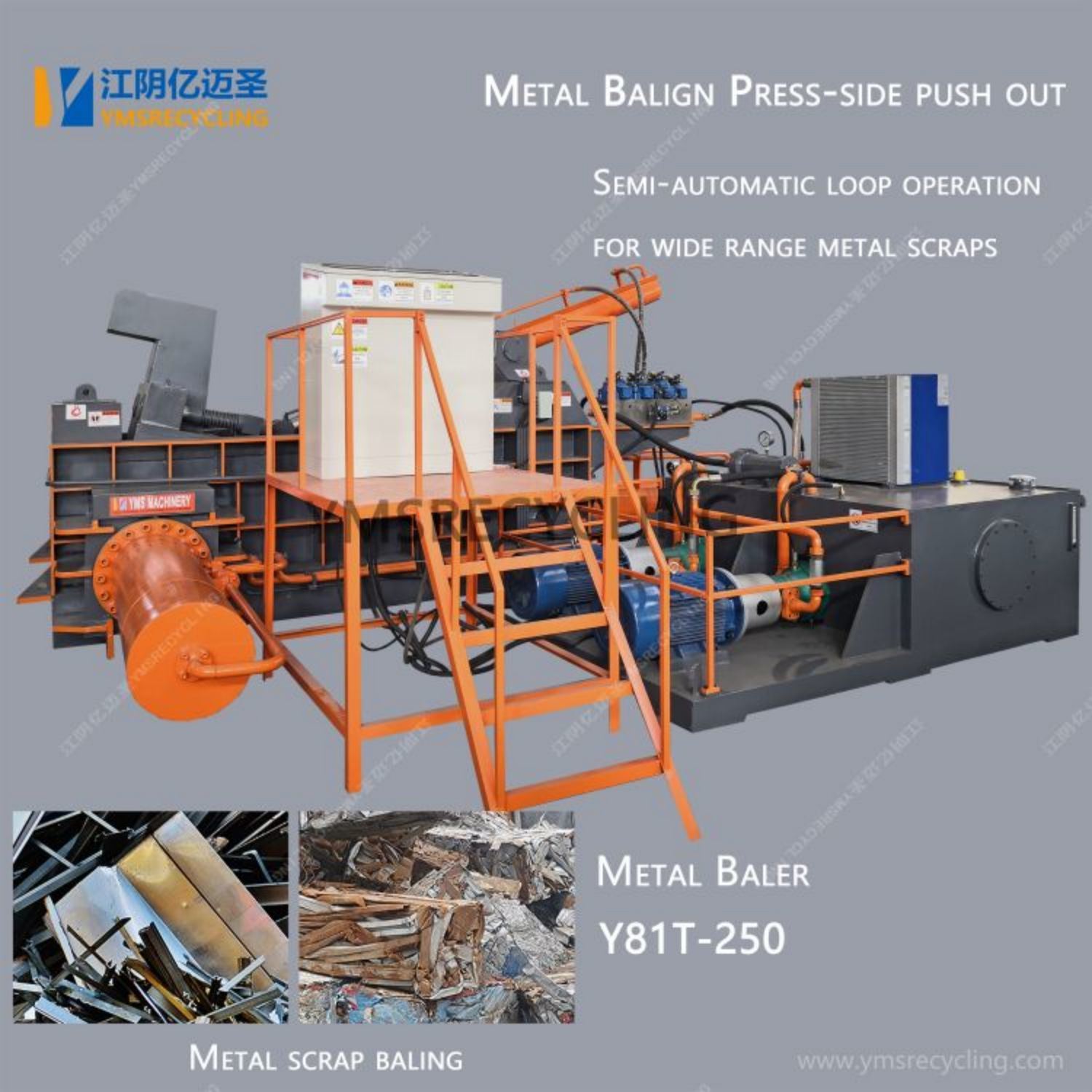
In a horizontal metal baler, scrap is loaded into a feed box from the top, and a pre-press ram compacts the loose material horizontally into the pressing chamber. The main pressing ram then compresses the material into the bale at the end of the chamber, and the finished bale is ejected from the front of the machine through an exit door. On fully automatic horizontal balers, the pre-press, main press, and bale ejection sequence runs continuously, allowing a near-continuous feed of loose scrap to produce a steady output of finished bales with minimal operator intervention.
The horizontal configuration separates the loading zone (where loose material is tipped in from above) from the pressing zone (where the main ram acts horizontally), which enables larger feed opening sizes and easier loading of bulky, irregular scrap. It also enables the continuous-feed operation that gives horizontal balers their throughput advantage over vertical designs for high-volume applications.
Side-by-Side Comparison: Vertical vs Horizontal Metal Baler
| Feature | Vertical Metal Baler | Horizontal Metal Baler |
|---|---|---|
| Loading method | Top or side loading into an open chamber; forklift, conveyor, or manual | Top loading into the feed box; typically forklift, excavator, or conveyor |
| Press direction | Vertical (top-down RAM) | Horizontal (side-acting main ram) |
| Operation mode | Batch: load → press → eject → reload | Semi-continuous or fully automatic: continuous feed possible |
| Throughput | Lower — limited by batch cycle time | Higher — continuous feed supports higher volume operations |
| Footprint | Smaller — compact vertical profile | Larger — longer horizontal machine body |
| Installation | Simpler — often no pit required; can be surface-mounted | Often requires a concrete pit or elevated feed platform for loading access |
| Bale consistency | Good for well-segregated homogeneous scrap | Excellent — consistent bale weight and density across continuous operation |
| Operator requirement | Operator involvement per cycle | Lower per-tonne operator time on high-automation models |
| Capital cost | Lower for equivalent pressing force | Higher — more complex machine with a pre-press mechanism |
| Best material types | Aluminium, copper, light ferrous, steel turnings, mixed light scrap | Light ferrous, steel, mixed automotive scrap, high-volume industrial scrap |
When Does a Vertical Baler Make More Sense?
A vertical configuration is typically the better choice when several of the following conditions apply to your operation:
Space is limited. A vertical baler's compact footprint — it occupies significantly less floor area than a horizontal machine with equivalent pressing force — makes it practical for workshops, small scrap dealers, and urban recycling facilities where space comes at a premium. The machine can be positioned against a wall with access from one side, minimising the area it occupies in the working facility.
The scrap volume is low to medium. Operations processing up to several hundred tonnes of scrap per month can typically meet their baling capacity requirements with a well-sized vertical baler. The batch operating cycle — load, press, eject — is efficient enough at this volume level that throughput is not a constraint. Scaling to a horizontal machine at this volume would mean paying for throughput capacity that the operation's input volume never exercises.
Material types vary. Vertical balers are practical for running different materials in sequence — a batch of aluminium sheet, then a batch of copper wire, then a batch of steel stampings — because the open chamber can be cleaned between material types and the machine is restarted from a fresh cycle. Horizontal machines optimised for continuous high-volume operation are less flexible for small batches of different materials.
The scrap includes high-value non-ferrous metals. Aluminium, copper, brass, and stainless steel are typically baled in smaller batches with careful material segregation to preserve their value grade. Vertical balers handle these materials efficiently and are the standard equipment choice for non-ferrous metal recyclers and secondary smelters who need to keep material streams separate for grade-based pricing.
When Does a Horizontal Baler Make More Sense?
A horizontal configuration is typically the better choice when:
Throughput is the priority. Operations processing large volumes of ferrous scrap — auto shredder residue, industrial manufacturing scrap, municipal scrap collection, large-scale demolition metal — require the continuous feed capability of a horizontal baler to keep pace with input volumes. A vertical baler's batch cycle cannot match the hourly tonnage output of a properly-sized horizontal unit running at capacity.
The material is bulky or difficult to load. Horizontal balers with large feed box openings can accept bulky, irregular scrap that would be difficult to load efficiently into a vertical chamber — automotive body panels, large structural sections, bundles of mixed light iron. The large feed opening of a horizontal baler accommodates a wider range of scrap sizes without pre-processing.
Bale weight consistency is important for transport logistics. Horizontal balers running in continuous mode produce bales of very consistent weight and dimensions, which simplifies load planning for transport and allows the operation to commit to consistent bale specifications when selling to steel mills or export buyers. Consistent bale dimensions also stack more efficiently in shipping containers, maximising payload utilisation.
The operation has sufficient space and site infrastructure. Horizontal balers require more floor area, and many designs require a concrete pit below the feed box or an elevated feed platform above the machine for loading access. If the site can accommodate this infrastructure, the throughput and automation advantages of a horizontal machine are fully accessible.
The Y82 and Y81: YMS Recycling's Vertical and Horizontal Baler Range
YMS Recycling's baling press range covers both configurations across a range of pressing force ratings:
The Y82 Vertical Hydraulic Metal Baling Machine is the vertical configuration, suited for small to medium volume operations, non-ferrous metal recycling, and facilities where space efficiency and material flexibility are priorities. The vertical press design and compact footprint make the Y82 practical for a wide range of installation environments from workshops to dedicated recycling facilities.
The Y81 Horizontal Hydraulic Metal Baling Machine is the horizontal configuration for higher-volume ferrous and mixed metal recycling operations requiring continuous feed capability and consistent high-throughput bale output. The Y81's horizontal pressing action and large feed opening handle bulky industrial scrap efficiently with lower per-tonne labour requirements than vertical alternatives at equivalent volumes.
Both machines are available in multiple pressing force ratings to match different operation sizes and material densities. Contact YMS Recycling to discuss the specific pressing force, bale size, and throughput requirements of your operation.
Frequently Asked Questions
What pressing force do I need for my scrap metal baling operation?
The required pressing force depends primarily on the material you are baling and the target bale density. Light aluminium sheet and thin steel stampings compress at relatively low force — 63 to 160 tonnes is typically sufficient for small to medium volume non-ferrous operations. Heavy mixed ferrous scrap, thick steel sections, and dense copper wire require significantly more force — 250 to 600 tonnes for industrial-scale ferrous baling operations. Your equipment supplier can calculate the recommended pressing force based on your material type, target bale weight, and bale dimensions if you provide those parameters.
What is the difference between a metal baler and a metal briquetting machine?
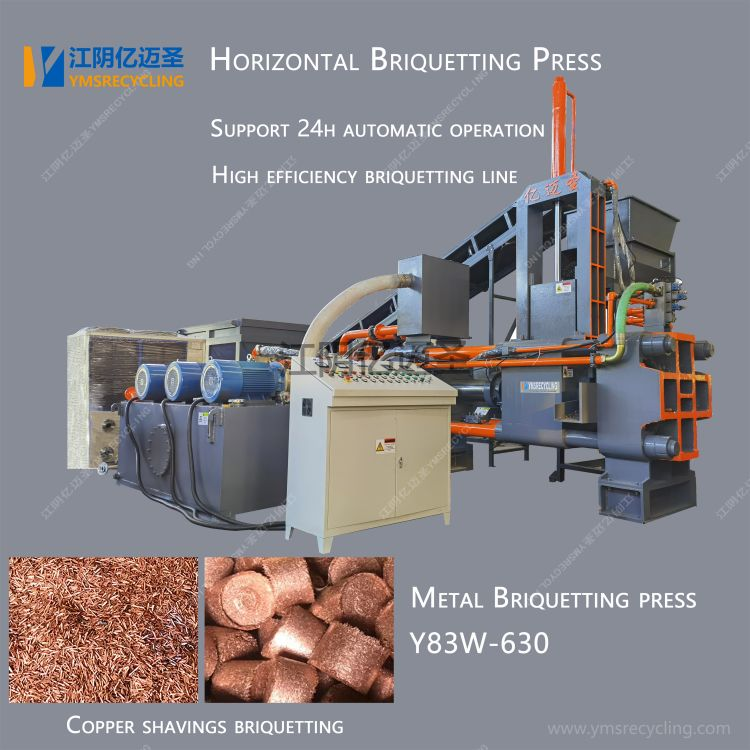
Both machines use hydraulic pressure to compress metal scrap, but they produce different outputs for different purposes. A metal baler produces large rectangular bales — typically 300–800 kg — suitable for transport to steel mills, smelters, or scrap export buyers. The bales are dense enough to handle and transport efficiently, but are intended to be remelted as bulk feedstock. A metal briquetting machine produces small dense cylindrical or rectangular briquettes — typically 0.5–5 kg each — from metal turnings, chips, and shavings. Briquettes are produced primarily for direct return to the smelter at maximum density and minimum volume, recovering cutting fluid from the chips in the process. The two machine types address different material forms and different points in the metal recycling chain.
Can a metal baler handle stainless steel and copper scrap as well as ferrous?
Yes — both vertical and horizontal metal balers can handle stainless steel and copper scrap, but the pressing force requirement differs. Stainless steel is harder and springier than mild steel, requiring more pressing force to achieve equivalent bale density. Copper is denser and more ductile, typically compressing more easily than ferrous but requiring careful segregation to maintain the material grade premium. For operations handling a mix of ferrous, stainless, and copper scrap, a vertical baler with adequate pressing force allows the flexibility to run different material types in separate batches with full material segregation, which is essential for preserving the price premium of non-ferrous and stainless grades over mixed ferrous scrap.
Metal Baling Press Machines from YMS Recycling
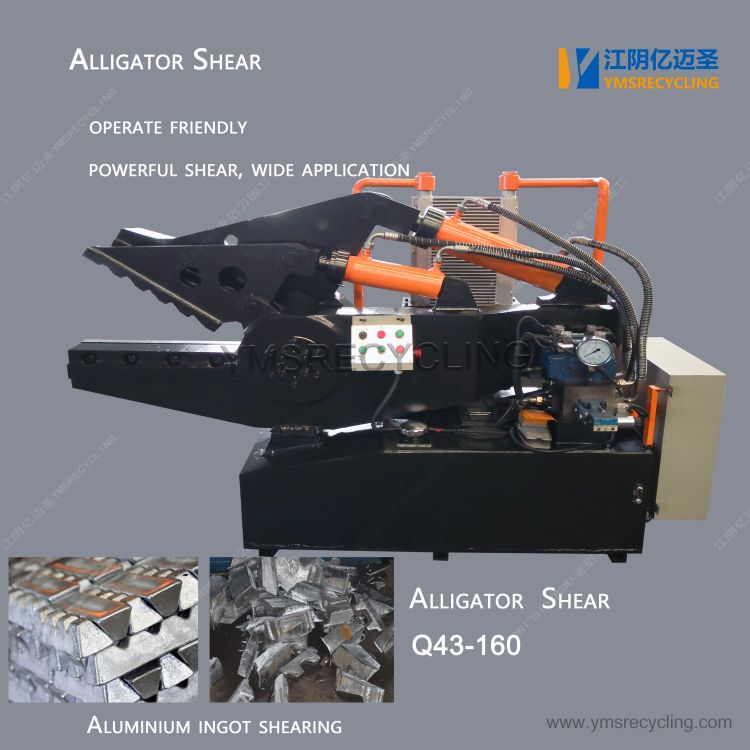
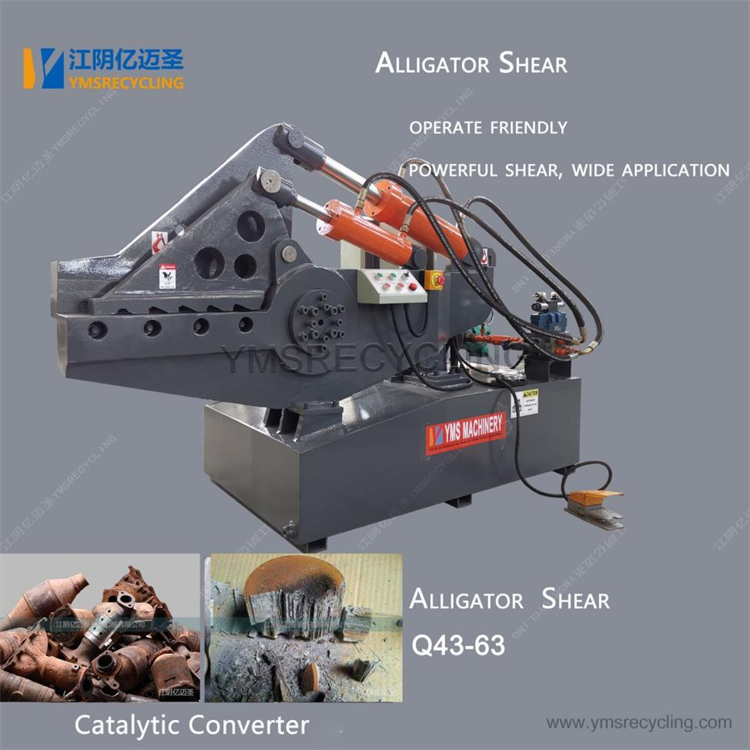
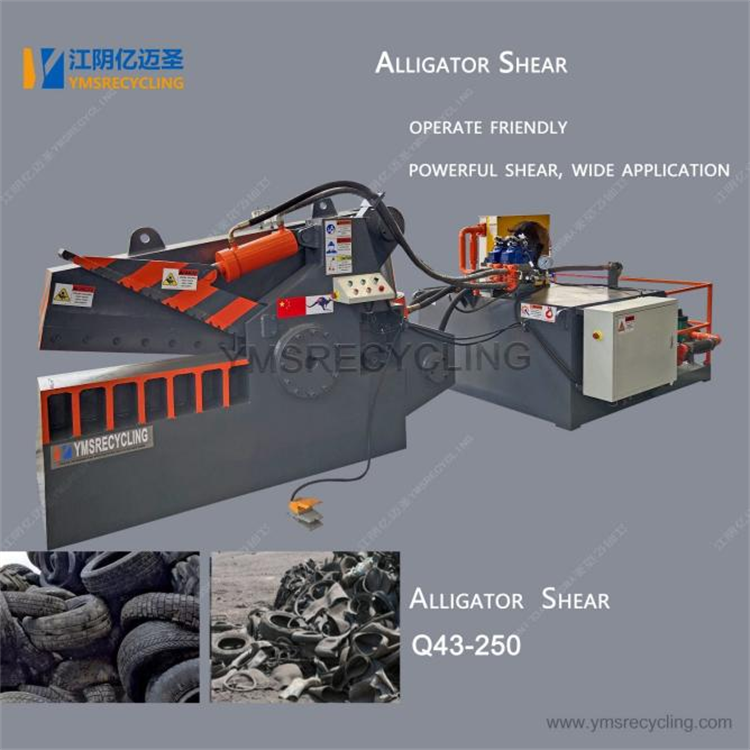
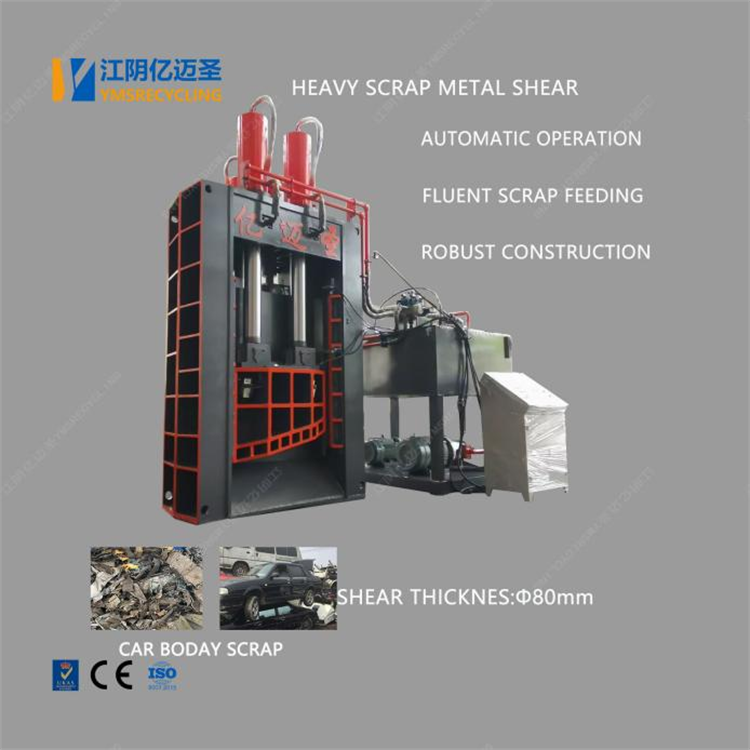
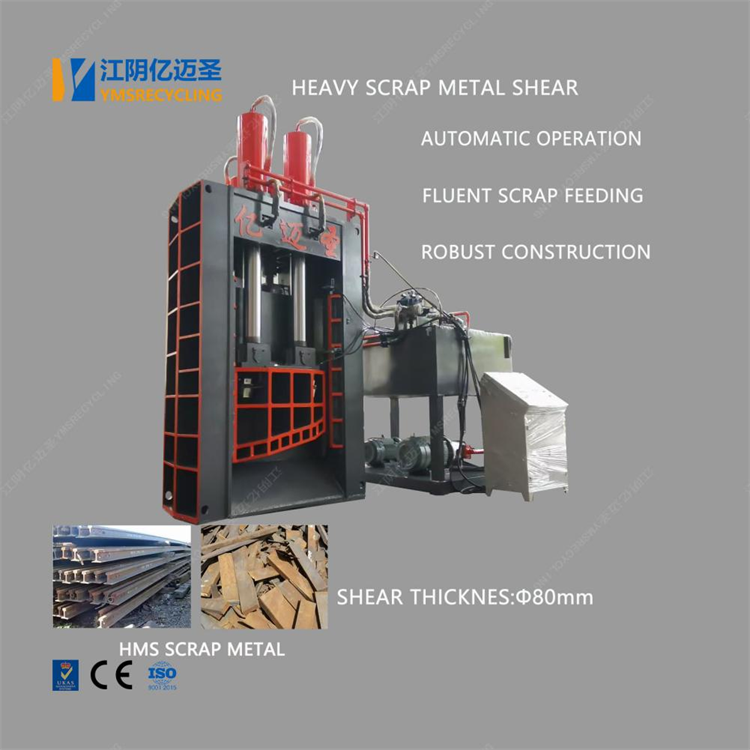
Jiangyin Yimaisheng Hydraulic Machinery Co., Ltd. (YMS Recycling) manufactures vertical and horizontal hydraulic metal baling machines — the Y82 and Y81 series — alongside metal briquetting presses, metal shearing machines, and catalytic converter decanners for the global scrap metal recycling industry. Manufacturing in Jiangyin, Jiangsu, China, with sales support in India.
Contact us with your operation details — material type, monthly volume, available space, and bale specification requirements — to get a recommendation and quotation for the right baling machine configuration.
Related Products: Y82 Vertical Metal Baling Machine | Y81 Horizontal Metal Baling Machine | Hydraulic Metal Briquetting Press Machine | Hydraulic Metal Shearing Machine