 English
 русский
 Español

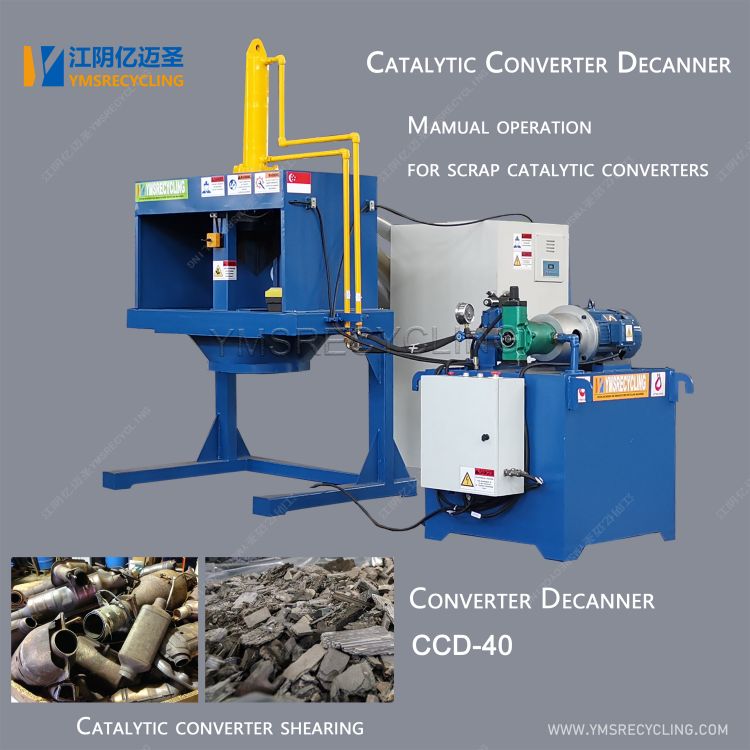
A catalytic converter decanner is a hydraulic machine designed to cut open the steel shell of a spent automotive catalytic converter and extract the ceramic or metallic substrate inside — the component that contains the platinum group metals (PGMs) that make catalytic converter recycling one of the most valuable operations in the scrap metal industry. Without a dedicated decanning machine, extracting the substrate is slow, physically demanding, and inconsistent. With one, a single operator can process hundreds of units per shift with minimal effort and reliable substrate integrity.
For scrap yards, auto dismantlers, PGM recyclers, and metal recycling operations that handle end-of-life vehicles, understanding how a catalytic converter decanner works — and why it matters for recovery yield and processing economics — is essential context for anyone evaluating this equipment category.
Content
- 1 Why Are Catalytic Converters So Valuable to Recycle?
- 2 How Does a Catalytic Converter Decanner Work?
- 3 What Types of Operations Benefit Most from a Catalytic Converter Decanner?
- 4 How Does Substrate Condition Affect PGM Recovery Value?
- 5 What Is the Difference Between Ceramic and Metallic Substrate Converters?
- 6 Frequently Asked Questions
- 7 Catalytic Converter Decanning Equipment from YMS Recycling
Why Are Catalytic Converters So Valuable to Recycle?
The catalytic converter in a petrol or diesel vehicle performs the chemical conversion of exhaust gases — carbon monoxide, unburned hydrocarbons, and nitrogen oxides — into less harmful compounds before they exit the tailpipe. The chemical reactions that make this possible depend on a washcoat of platinum group metals applied to the surface of the converter's substrate: platinum, palladium, and rhodium, in varying proportions depending on the converter type and vehicle application.
Platinum, palladium, and rhodium are among the most valuable metals on earth. Rhodium prices have at times exceeded $20,000 per troy ounce — more than ten times the price of gold. Even at more moderate market prices, a single catalytic converter from a passenger car may contain $50–$300 worth of PGMs, while converters from diesel trucks, construction equipment, and industrial engines contain significantly more. A scrap operation processing 100 converters per day is handling thousands of dollars of PGM value daily — and the recovery rate from that substrate directly determines how much of that value is actually realized.
The substrate — the honeycomb-structured ceramic or metallic core inside the converter — must be removed intact and in a form suitable for assaying and smelting to recover the PGMs. Crushing, breaking, or contaminating the substrate during extraction reduces recovery yield and, therefore, the price paid by the PGM refiner. A properly designed catalytic converter decanner extracts the substrate cleanly, preserving its integrity for maximum recovery value.
How Does a Catalytic Converter Decanner Work?
A hydraulic catalytic converter decanner operates through a cutting and pressing sequence that opens the steel outer shell without mechanically damaging the substrate inside. The general operating cycle is:
- Loading: The spent catalytic converter is placed in the machine's work chamber, positioned between the cutting blades or punches and the support structure. Most decanner designs accommodate a range of converter sizes — from small passenger car converters to large truck and industrial converters — through adjustable clamping or multiple tooling configurations.
- Clamping and positioning: The machine clamps the converter body to prevent movement during cutting. Accurate positioning ensures the cut is made at the correct location on the steel shell — typically along the seam or at the end cap — to open the shell with minimal disturbance to the substrate inside.
- Hydraulic cutting: The hydraulic system drives cutting blades or a punch through the steel outer shell of the converter. The cutting force required depends on the shell thickness and material — passenger car converters have thinner shells than heavy truck units, and stainless steel shells require more force than mild steel. A properly sized hydraulic system cuts through the shell cleanly in a single stroke without distorting the shell inward in a way that would crush the substrate.
- Shell opening and substrate extraction: Once the cut is made, the shell halves are separated — either by the machine's mechanical action or manually — and the substrate slides or is pushed out. With a clean, well-executed cut, the ceramic or metallic monolith emerges undamaged and ready for collection.
- Shell ejection: The empty steel shell is ejected or removed from the work area. The steel shell itself has scrap value as clean stainless or mild steel and should be collected separately from the substrate.
What Types of Operations Benefit Most from a Catalytic Converter Decanner?
Any operation that processes a significant volume of end-of-life vehicles or catalytic converters benefits from a dedicated decanner. The specific applications where the economics are most compelling:
Auto dismantling and salvage yards processing large numbers of end-of-life vehicles accumulate catalytic converters as a by-product of their core dismantling activity. Manual decanning is time-consuming and ergonomically demanding — a hydraulic decanner cuts the per-unit processing time from several minutes to under a minute, multiplying throughput and freeing labor for other tasks. The PGM value recovered from cleanly extracted, intact substrates consistently exceeds what can be negotiated for unprocessed whole converters, making the machine investment straightforwardly recoverable.
Scrap metal recyclers who buy catalytic converters from garages, fleet operators, and the public can add a significant margin by decanning and sorting substrates before selling to PGM refiners, rather than selling whole converters at a lower blended price. Refiners pay a premium for clean, separated substrate because it reduces their own processing cost — and the decanning machine is what makes that separation economically feasible at scale.
PGM traders and brokers who aggregate converters from multiple sources before selling to refiners use decanners to verify substrate type and condition, sort by PGM grade, and present material in the form that commands the best refinery pricing. Visual inspection of the extracted substrate — substrate type (ceramic versus metallic), condition (intact, cracked, or oil-contaminated), and color (normal grey versus the brown or black coloration of damaged units) — is far easier on the extracted substrate than on the whole converter.
How Does Substrate Condition Affect PGM Recovery Value?
The PGM refiner's assay price for a batch of catalytic converter substrate depends primarily on the PGM content — which is determined by sampling and chemical analysis — but substrate condition at the time of submission significantly affects the yield realized from that assay:
- Intact ceramic monolith: Provides the most consistent sampling and the highest recovery rate. The full PGM content of the washcoat is available for recovery, and the sampling is representative across the undisturbed honeycomb structure.
- Cracked or fragmented ceramic: Cracked substrates from overly aggressive manual extraction or from poorly designed decanners that crush the shell inward during cutting lose some ceramic material as fine dust. PGM-containing ceramic dust that escapes during processing is value lost permanently. A clean hydraulic decanning cut minimizes substrate cracking and fragmentation.
- Contaminated substrate: Oil or coolant contamination of the substrate — from a converter that was removed from a vehicle with engine oil burning — dilutes the PGM content per unit weight and complicates the refinery's recovery chemistry. Contaminated units should be identified, sorted separately, and declared to the refiner. Visual inspection after decanning makes contamination identification straightforward; it is nearly impossible on a whole converter.
What Is the Difference Between Ceramic and Metallic Substrate Converters?
Ceramic substrate converters use a cordierite (magnesium iron aluminium silicate) honeycomb structure coated with the PGM washcoat. Ceramic substrates are the most common type in passenger cars. Metallic substrate converters use a corrugated thin metal foil (typically FeCrAl alloy) as the substrate structure, coated with PGM. Metallic substrates offer better performance at cold start and in high-performance applications. They are less common than ceramic but typically contain higher PGM loadings. From a decanning perspective, metallic substrates are less fragile than ceramic and tolerate slightly more aggressive extraction, but clean cutting remains important for both types to maximize recovery value.
Frequently Asked Questions
How many catalytic converters can a decanner process per hour?
Processing rate depends on the machine design and operator experience, the size range of converters being processed, and whether any sorting or inspection step is built into the workflow. A hydraulic catalytic converter decanner operated by an experienced operator on standard passenger car converters can typically process 60–120 units per hour. Large truck and industrial converters, which may require repositioning or multiple cuts, take longer per unit — typically 3–6 minutes each. For high-volume operations, matching the decanner's throughput capacity to the expected daily input volume is an important sizing consideration.
What happens to the steel shell after decanning?
The empty steel outer shell of the catalytic converter — typically stainless steel or mild steel, depending on the vehicle type and converter location — is clean scrap metal with straightforward resale value. Stainless steel shells command a premium over mild steel and should be sorted separately if volume justifies it. Some operations bale or briquette the shells along with other stainless or mild steel scrap; others sell them loose as clean post-industrial scrap. Either way, the shell value contributes to the overall economics of the decanning operation and should be tracked separately from the substrate value.
Is it legal to process and sell catalytic converter scrap?
Catalytic converter recycling is legal in most jurisdictions, but the industry has been subject to increasing regulation in response to catalytic converter theft. In the United States, the PART Act introduced federal documentation requirements for catalytic converter purchases. Many individual US states have additional regulations requiring buyers to document the source of converters. Operations buying and processing catalytic converters should verify compliance with the applicable regulations in their jurisdiction — including documentation requirements for seller identity, vehicle source, and chain of custody — before scaling their decanning operation.
Catalytic Converter Decanning Equipment from YMS Recycling
Jiangyin Yimaisheng Hydraulic Machinery Co., Ltd. (YMS Recycling) manufactures the CCD Catalytic Converter Decanner alongside its full range of hydraulic metal recycling equipment, including metal shearing machines, metal baling presses, and metal briquetting machines. With manufacturing in Jiangyin, Jiangsu, and sales offices in China and India, YMS Recycling serves scrap metal processing operations across Asia, the Middle East, Africa, and beyond.
Contact us to discuss the CCD Catalytic Converter Decanner specifications and pricing for your operation.
Related Products: CCD Catalytic Converter Decanner | Q43 Alligator Shearing Machine | Q91 Heavy-Duty Shearing Machine | Metal Briquetting Press Machine