 English
 русский
 Español

Investing in a hydraulic metal shear machine is a definitive solution for businesses aiming to optimize their metal processing operations. These machines provide superior cutting force, enhanced energy efficiency, and the ability to handle heavy-duty materials that mechanical alternatives cannot process effectively. The adoption of hydraulic shearing technology significantly reduces operational costs while increasing throughput in recycling and scrap yards. By leveraging high-pressure hydraulic fluid, these systems deliver consistent power, ensuring clean cuts through various metal grades, including steel beams, copper wires, and aluminum sheets. For any facility dealing with substantial volumes of scrap metal, a hydraulic shear is not just an option but a necessity for maintaining competitiveness and operational safety.
Content
- 1 Fundamental Working Principles of Hydraulic Technology
- 2 Comparing Hydraulic and Mechanical Shearing Systems
- 3 Key Benefits of Using Hydraulic Metal Shears
- 4 Types of Hydraulic Metal Shear Machines
- 5 Critical Factors for Selection and Implementation
- 6 Maintenance Best Practices for Longevity
- 7 Safety Protocols for Operators
Fundamental Working Principles of Hydraulic Technology
Understanding the core mechanism of a hydraulic metal shear machine is crucial for operators and maintenance personnel. Unlike mechanical shears that rely on flywheels and electric motors to drive the blade, hydraulic systems utilize fluid power. The process begins with an electric motor driving a hydraulic pump, which pressurizes the fluid—typically oil—in a closed system. This pressurized fluid is then directed to a hydraulic cylinder.
The cylinder contains a piston that moves linearly when the fluid is forced into it. This movement is transferred to the shear blade, which descends with immense force to cut through the metal. One of the significant advantages of this system is the ability to regulate the pressure and speed of the cut. Hydraulic systems allow the blade to apply full force throughout the entire stroke, unlike mechanical systems where force may vary depending on the flywheel's position. This ensures that even the toughest materials are sheared efficiently without stalling the machine.
Comparing Hydraulic and Mechanical Shearing Systems
When selecting equipment for metal processing, it is vital to distinguish between hydraulic and mechanical shears. While both serve the primary function of cutting metal, their operational capabilities differ significantly. Mechanical shears are often limited in terms of the length of the stroke and the ability to adjust cutting parameters on the fly. They are generally better suited for light-gauge sheet metal where high-speed production is required.
In contrast, hydraulic metal shear machines excel in heavy-duty applications. They offer greater flexibility, allowing the operator to adjust the stroke length and the pressure applied to the material. This adaptability is essential when dealing with irregular shapes or varying thicknesses of scrap metal. Furthermore, hydraulic shears operate with less noise and vibration compared to their mechanical counterparts, contributing to a safer and more comfortable working environment. The versatility of hydraulic shears makes them the preferred choice for scrap yards and metal recycling centers.
| Feature | Hydraulic Shear | Mechanical Shear |
|---|---|---|
| Cutting Force | High and consistent | Varies by cycle |
| Noise Level | Lower | Higher |
| Maintenance | Fluid maintenance | Mechanical wear parts |
| Best Application | Heavy Scrap & Beams | Light Sheet Metal |
Key Benefits of Using Hydraulic Metal Shears
The implementation of hydraulic metal shear machines brings a multitude of advantages to an industrial operation. These benefits extend beyond simple cutting capabilities, influencing overall productivity and cost management. Understanding these advantages helps businesses justify the initial investment and recognize the long-term value.
Exceptional Cutting Power
The primary advantage is the immense force generated by the hydraulic system. This force is measured in tons and allows the machine to slice through dense materials like solid steel bars and thick plates. Mechanical advantage is achieved through the Pascal principle, where pressure applied to the fluid is transmitted equally in all directions. This capability ensures that even the most robust metal waste is processed quickly, eliminating bottlenecks in the production line.
Operational Efficiency and Speed
While mechanical shears might be faster for thin sheets, hydraulic shears offer superior efficiency in bulk processing. The cycle time for a hydraulic shear can be optimized to match the feeding speed of conveyors or loaders. Additionally, the ability to return the blade to the starting position rapidly after a cut ensures that the next piece of metal can be positioned immediately. This continuous flow is essential for high-volume recycling facilities where time is money.
Enhanced Safety Features
Modern hydraulic shears are equipped with advanced safety mechanisms. Because the motion is powered by fluid, the machine can be designed with overload protection valves. If the blade encounters an obstruction that exceeds its capacity, the system can relieve pressure, preventing catastrophic failure or damage to the components. Furthermore, the control systems allow for precise "hold" and "return" functions, giving operators complete control over the cutting head, thereby reducing the risk of accidents.
Types of Hydraulic Metal Shear Machines
Not all hydraulic shears are built the same. They come in various configurations, each designed for specific tasks within the metalworking and recycling industries. Selecting the right type depends on the nature of the material being processed and the desired output size.
Alligator Shears
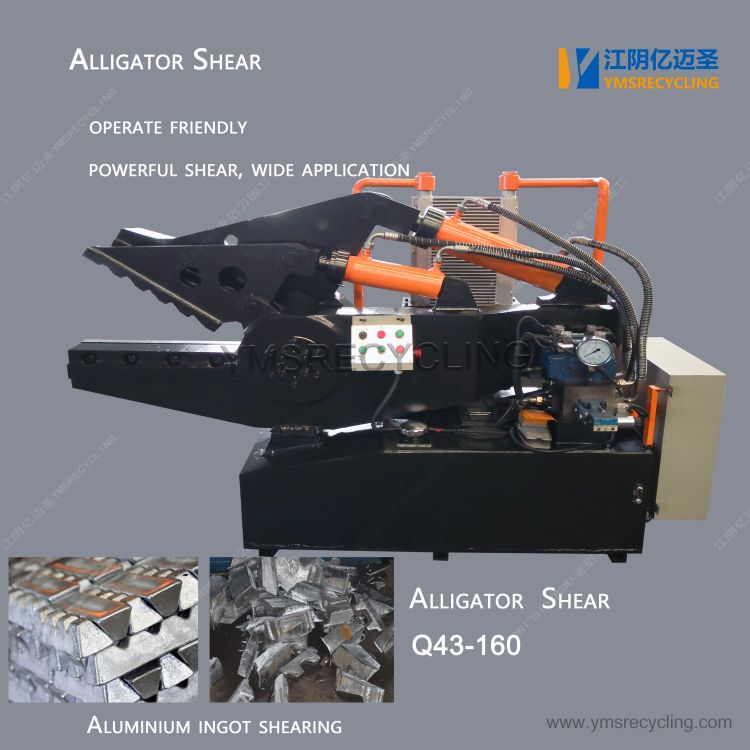
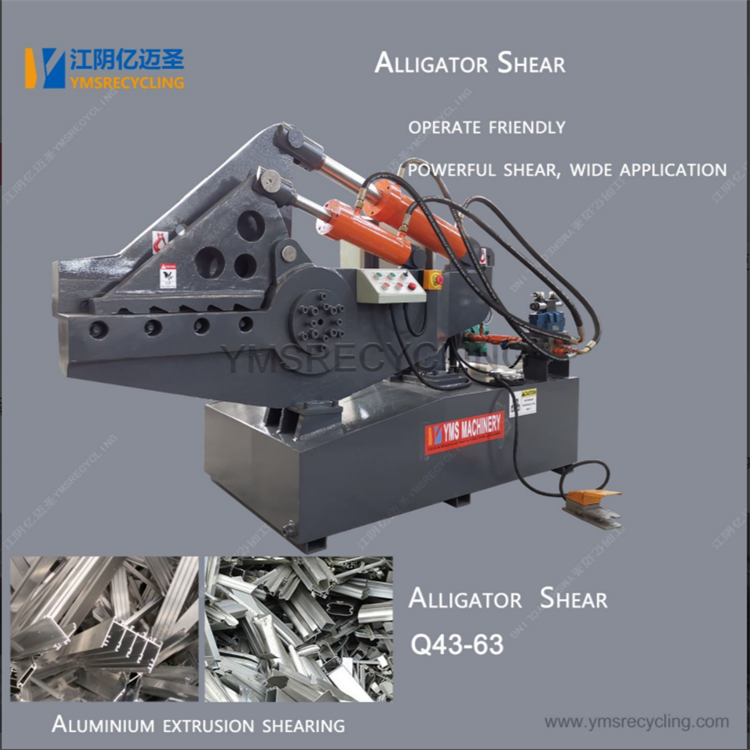
Also known as crocodile shears, these are perhaps the most recognizable type in scrap yards. They feature a hinged jaw mechanism that resembles the mouth of an alligator. The lower jaw is stationary, while the upper jaw moves in an arc to cut the metal placed against the lower jaw. These machines are ideal for cutting long metal profiles, such as beams, rails, or pipes, into manageable lengths. Alligator shears are highly effective for pre-processing scrap before it is fed into a shredder or baler.
Guillotine Shears
Guillotine shears operate with a straight-line vertical motion. The blade moves down perpendicular to the material, similar to a paper cutter but on a massive scale. This design is preferred for cutting sheet metal and plates because it provides a straight, clean cut across the entire length of the blade. Guillotine shears are often used in steel fabrication shops where precision cutting of flat stock is required before further processing like welding or rolling.
Portable Hydraulic Shears
For applications that require mobility, such as demolition sites or construction zones, portable hydraulic shears are used. These are often attachments for excavators or skid steers. They draw hydraulic power from the carrier machine's system and are used to cut through structural steel components during the demolition of buildings or bridges. These portable units provide the versatility to bring the cutting force directly to the source of the metal waste.
Critical Factors for Selection and Implementation
Choosing the right hydraulic metal shear machine requires careful consideration of several technical and operational parameters. A mismatch between the machine's capabilities and the facility's needs can lead to inefficiency and increased wear.
- Shear Length and Capacity: The physical length of the blade determines the maximum width of the material that can be cut in a single pass. The capacity, usually measured in tons, dictates the thickness and type of metal that can be sheared.
- Cycle Speed: For high-volume operations, the speed of the shear is critical. A machine with a faster cycle rate will process more material per hour, directly impacting profitability.
- Power Source: While most machines are electrically powered, some industrial environments might use diesel-hydraulic units, especially in remote locations or where electricity supply is unstable.
- Footprint and Integration: The physical size of the machine must fit within the existing floor plan. Additionally, consider how the machine integrates with other equipment, such as conveyor belts or loading cranes.
Maintenance Best Practices for Longevity
To ensure the hydraulic metal shear machine continues to operate at peak efficiency, a rigorous maintenance schedule must be followed. Hydraulic systems are sensitive to contamination and wear, making preventative measures essential.
The most critical aspect is maintaining the quality of the hydraulic fluid. The fluid acts as both a power transmitter and a lubricant. Over time, it can accumulate metal shavings, dirt, and moisture, which can damage the pump and valves. Regularly changing filters and analyzing the hydraulic oil for contamination are vital steps in preventing major breakdowns. Additionally, the blades themselves require periodic inspection. Dull or chipped blades not only reduce cutting efficiency but also put unnecessary stress on the hydraulic cylinder, potentially leading to premature failure.
- Inspect hydraulic hoses for leaks or cracks daily.
- Check the oil level and quality weekly.
- Lubricate all moving parts, such as the pivot points on alligator shears.
- Tighten all bolts and electrical connections to prevent vibration loosening.
- Sharpen or replace blades immediately if wear patterns are detected.
Safety Protocols for Operators
Operating a hydraulic metal shear machine involves significant risks, including crushing hazards and lacerations. Establishing and enforcing strict safety protocols is non-negotiable.
Operators must be trained to keep their hands and body parts clear of the shear zone while the machine is cycling. The use of safety guards and light curtains is highly recommended; these devices automatically stop the machine if an object interrupts the sensing field. It is also crucial to ensure that the metal being cut is properly supported to prevent it from pinching or snapping back unexpectedly. A safe working environment is maintained not just by machine guards, but by a culture of safety awareness and strict adherence to operating procedures.